Joshua might tuck Ngannou to sleep but plenty blockbuster matchups still await in the wings.

By: Abdallah ‘Khabib’ Jallow

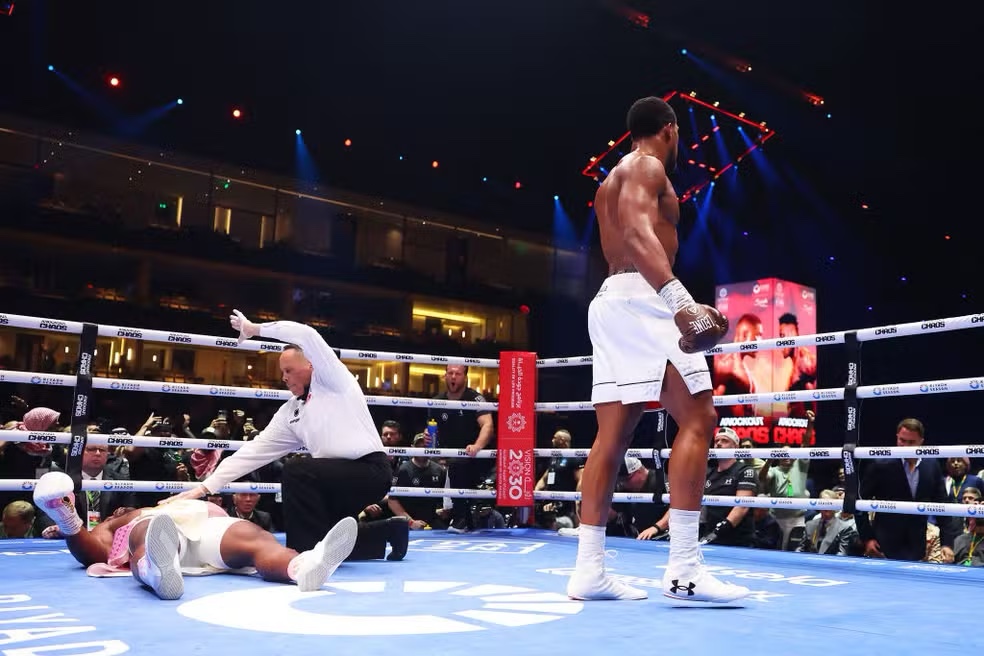
Joshua knocked out Ngannou in round 2 earlier this month in a mouthwatering contest in Saudi.

When Anthony Joshua put Francis Ngannou to sleep in the early hours of Monday morning of March 10th, in Riyadh, Saudi Arabia over the weekend, he almost certainly prompted some relief among boxing devotees anxious about the MMA fighter showing the same kind of success that he had against Tyson Fury a few months ago.

Fury had sought to place himself front and center of the fight week promotion, reportedly almost coming to blows with Ngannou at a private function in midweek. He stated on several occasions that Ngannou should be grateful to him for making the Cameroonian millions of dollars, and he was at least partly right – even if he left unsaid the fact that Ngannou’s gratitude should be for Fury having turned in such an execrable performance when the two men squared off in October.

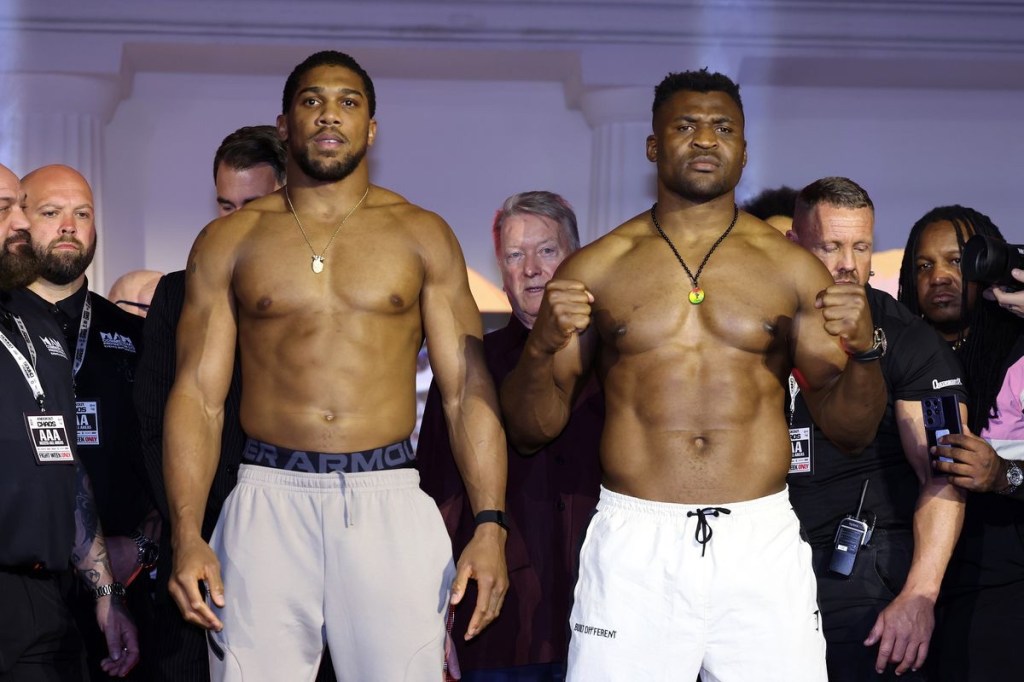
Joshua vs. Ngannou official weigh-in @ the ‘Knockout Chaos’.

Arguably, Joshua should be even more grateful. Had he flattened Ngannou without the former UFC champ decking Fury and pushing him to the limit, the result would have been met with shrugs. But because Joshua did what Fury could not, the talk now is of Joshua being “back” and possibly even being the favorite should the long-touted “Battle of the Brits” ever come to fruition.

Still, in the grand scheme of things, that was the least objectionable element of the whole enterprise. The repeated, apparently mandatory, expressions of gratitude to Crown Prince Mohammed bin Salman are perhaps only to be expected from a sport that has played footsie with Mobutu Sese Seko and Ferdinand Marcos, that has handed over the keys to the likes of Frankie Carbo and Daniel Kinahan, and that happily staged big events in apartheid South Africa. But that doesn’t make the enthusiasm with which the sport is drinking from a firehose of riyals any easier to take.


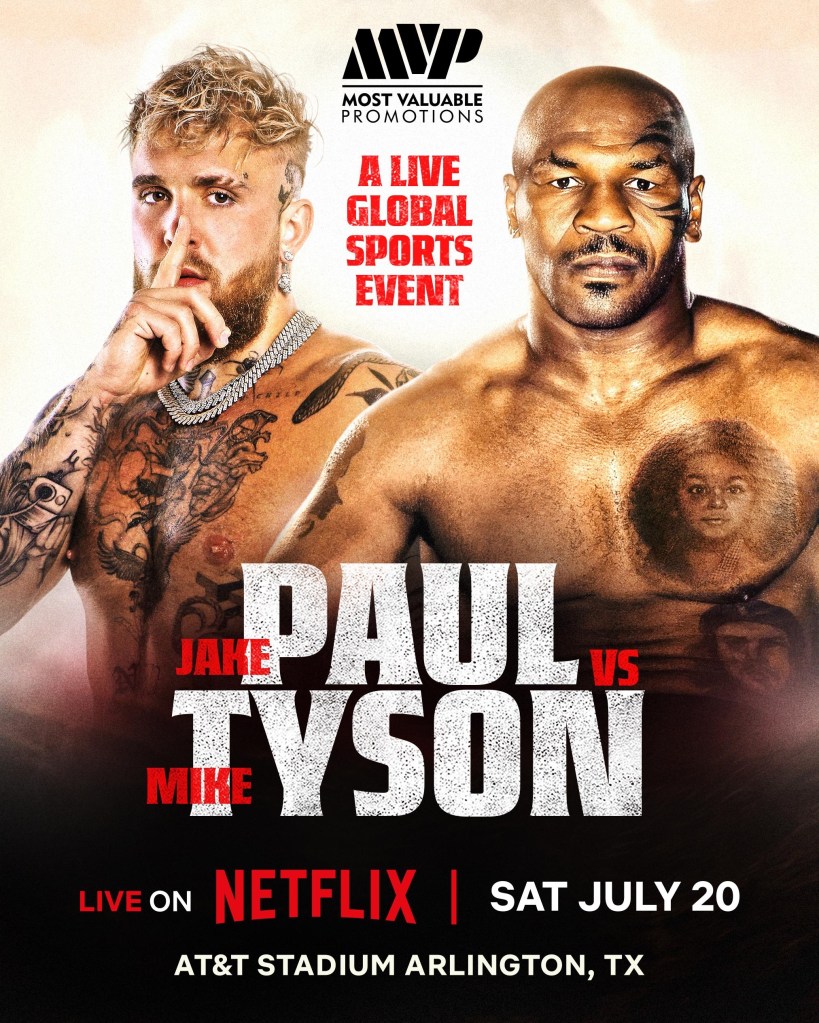
Given boxing’s history as the theater of the truly absurd, it no longer seems unreasonable to imagine that the biggest fight of the year may be between a 28-year-old influencer-turned-novice boxer and a former champion who is closing in on his 60th birthday, but here we are.

YouTubeber-turned boxer taking on legendary Mike Tyson.

In truth, Jake Paul meeting Mike Tyson in June on Netflix is a genius move for those involved. Tyson retains a vice-like grip on the affections of even, perhaps especially, the most casual of boxing fans. There are plenty who assume he is one of the greatest two or three heavyweight champions of all time, or even the very best.

If this is a sanctioned contest and not an exhibition, and if Paul wins, then rightly or wrongly, it enhances Paul’s credibility as a boxer immensely among that same casual fanbase and reinvigorates a career that has sputtered ever so slightly since he lost to Tommy Fury. It might reasonably be asked how someone who couldn’t defeat a marginal boxer like Fury could possibly defeat a Hall of Famer like Tyson, but 30 years is an enormous age difference. When was the last time Tyson scored a genuinely meaningful win? When Bruce Seldon capitulated in 1996? Paul wasn’t even born then. And sure, Tyson looked decent in an exhibition against Roy Jones, but that was more than three years ago – which, when you’re in your fifties, is an eternity – and Jones was himself closing in on 52.

But if Tyson is somehow able to summon up the muscle memory to knock Paul out, Paul will be able justifiably to fall on the excuse that he has just begun boxing and was daring to challenge a modern great. If Tyson loses, he’ll shrug, pocket the money and point out that 58 is no age to be throwing punches with youngsters in their twenties.

Whether it should be happening – whether we should be encouraging young men to beat up near-pensioners, or whether Hall Of Famers should be being dragged out of retirement to validate the boxing careers of influencers – is another matter, of course. There is, as there is always in boxing, the risk that it could all go horribly wrong and that somebody could end up badly hurt.

As for concerns about the integrity of boxing? Entirely understandable. But it’s hard not to feel that ship sailed a long time ago, with any number of characters lining up to take the helm.

The best case scenario is that the event is an exhibition in which both men pull their punches, and the undercard is stacked with strong talent, given a casual, Netflix-subscribing fan base exposure to some quality boxing as well as a hopefully entertaining main event.

Either way, boxing fans should be prepared for this being the only fight their friends ask them about for the next several months.


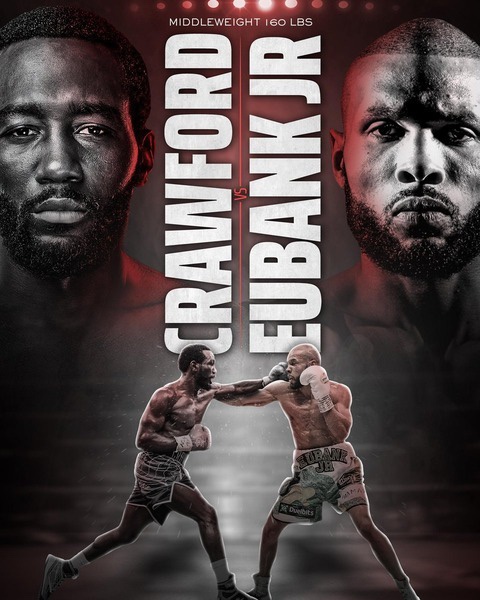
Similarly, the rumored matchup between Terence Crawford and Chris Eubank Jr also makes sense. Crawford badly wants to fight Canelo Alvarez, and to that end he wants to demonstrate his ability to mix it up with the bigger boys. And Eubank would be the perfect foil: not exactly renowned as a hard puncher, the Brit relies primarily on his boxing skills – skills that, while not inconsiderable, aren’t even in the same solar system as the generationally-talented Nebraskan.

Eubank Jr looks to take World Welterweight Champion Crawford..

For Crawford, the matchup offers the promise of a very winnable fight that advances his long-term goals. And Eubank lands himself a meeting with the man who is, at worst, the second-best fighter on the planet right now – and there is always the chance he can spring the upset. Stranger things have happened. Not many, but some.

The other recently rumored pairing, that of Manny Pacquiao and Conor Benn, is more of a head scratcher. Not from Benn’s perspective: here’s an opportunity for a man who still is not licensed to fight in Britain and who has yet to offer publicly a plausible explanation for his failed PED test to share the stage with an all-time great who is way past his sell-by date. Pacquiao’s motivations, should there be any fire to go with the smoke, are more difficult to discern. Perhaps he looked at Benn’s extreme ordinariness in his two most recent outings and calculated that he presents an easy night’s work. Or maybe, with his senatorial career over for now, his presidential ambitions thwarted, and his bank balance presumably drained, he simply needs the money.

Undisputed! Vladimir ‘The Kremlin god’

By Abdallah ‘Khabib’ Jallow
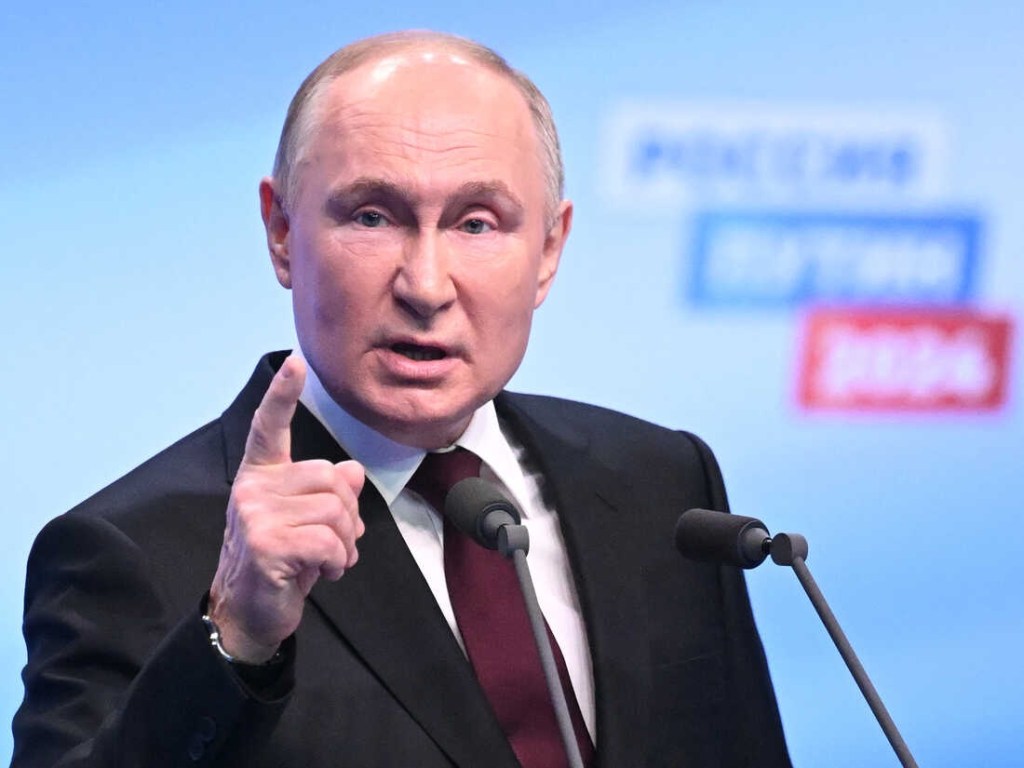
Russian President—Vladimir Putin 🎖️🇷🇺

Relaxed in his garden under Moscow’s chilly snowy skies, Putin sips his coffee. He’s not just a leader; he’s a guru—the ‘Kremlin god,’ as his loyalists hail him. Across the board, there’s Alexei Navalny, a thorn in Putin’s side, challenging the very essence of Kremlin power.

Navalny’s rise unsettled Putin. But like a seasoned chess grandmaster, Putin strategized, making calculated moves to silence Navalny’s dissent. His first play? A poison plot worthy of a spy novel, executed during a Berlin bar soirée.

In the heart of political intrigue—Putin played a strategic game. Alexei, perhaps the youngest if not the bitterest of Kremlin’s critics since the dramatic fall of the Soviet Communist cathedral. My old landlady would tell me, “even warlord Gorbachev wouldn’t have withstood the heat of Alex’s [Alexei] razor-sharp critiques.” However, Putin’s resilience and calculated moves constantly sought to silence Navalny.
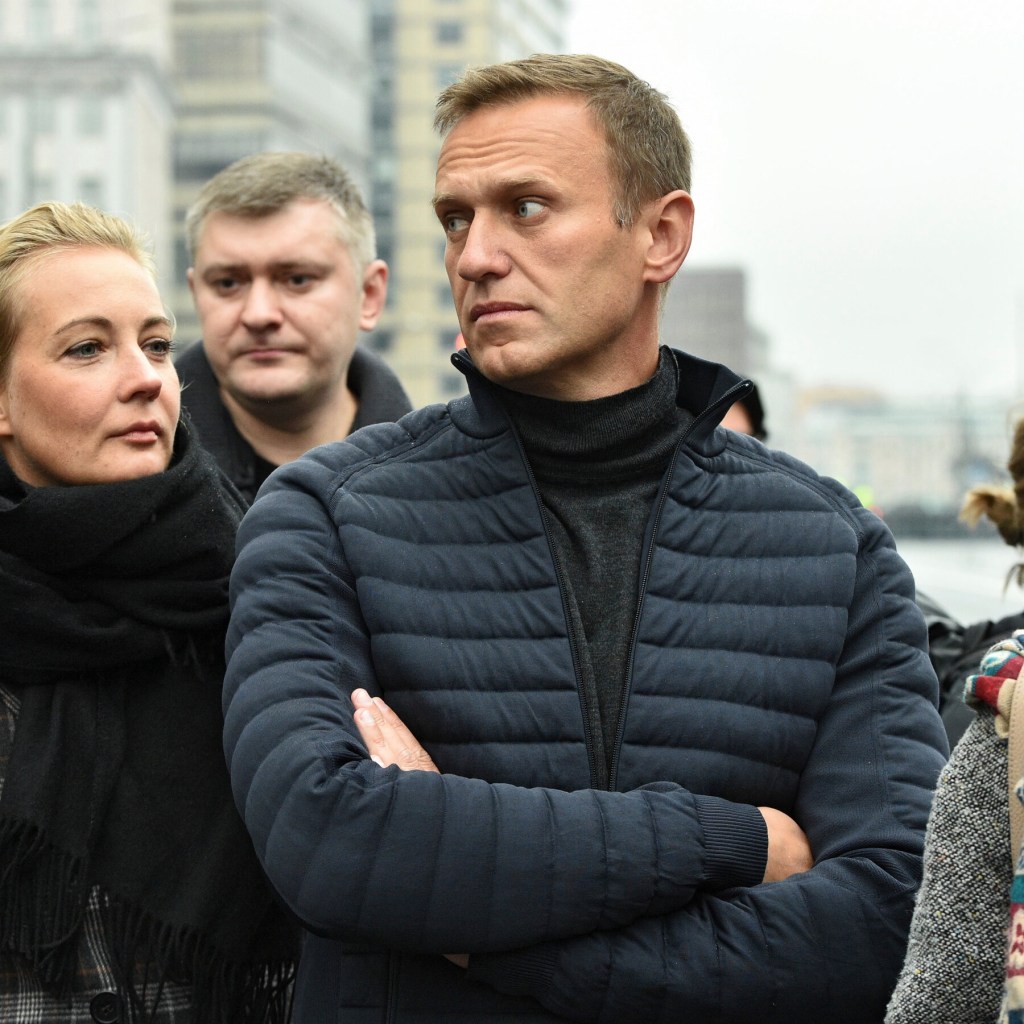
Former Kremlin Critic—Alexei Navalni (deceased)

As Navalny rose to prominence, Putin faced a challenge unlike any other. With a tenacity that mirrored that of a political chess master, Putin maneuvered the pieces on the board. His iron grip on power led him to orchestrate a series of strategic ploys, skillfully suppressing Navalny’s voice and influence. Putin’s first move on the chessboard took a script from his old playbook— ‘… and if the pieces on a chessboard were endowed with consciousness, they’d probably have little difficulty in ascribing their moves to freewill.’—Vlad through his overseas assignments then in Germany, took to poison Navalny while Alexei was out dining at a bar in an early evening Berlin suburb.

But for that scrabble slot, it was too little to eliminate Alexei, a testament to Navalny’s resilience. Alexei was then given regimen—but hidden—in a treatment facility somewhere in Germany.

For the nonce, in spite of seismic international scrutiny, Putin deftly navigated diplomatic waters, solidifying his image as a formidable strongman. Forget the famous luck of the Irish; “Vladimir the god” is an algorithm of political prowess, where resilience met cunning, and the Kremlin’s grip tightened.

Through intricate maneuvers and geopolitical finesse, Putin left Navalny alienated. The tale of Vladimir Putin’s strategic silencing of his critics now becomes a chapter in the annals of political mastery, creating a narrative that echoed through the echelons of power.

From Prigozhin to Navalny, peevish Putin wouldn’t give a space for his critics to breathe. Through his game of chess, Vladimir ‘The Kremlin god’ once again—but this time in a more simplistic affair—retains his throne.

Even so, in the aftermath of the just-concluded tumultuous state elections where Putin marched to the polls unopposed amidst the uproar and fervor of controversy, under the current Russian constitution, Putin is eligible to run for president for another six-year term in 2030. This means he could potentially remain in power until 2036, and if so, will surpass Stalin as the longest-serving Russian leader since the beginning of the Soviet era. As backlashes rekindle but allies applaud, Putin’s throne remains undisputed, solidifying his status as ‘The Kremlin god,’ a colossus in the corridors of power.
The Misfit Comes of Age!

By: Abdallah Khabib Jallow

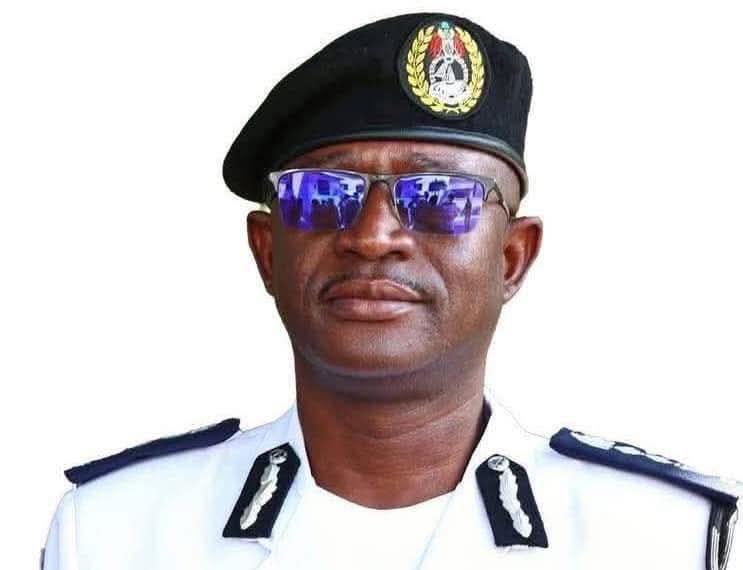
Inspector General of Police, Seedy Mucktarr Touray

In my books, The Gambia Police Force, particularly since the Jammeh regime, has regrettably assumed the unenviable position of the country’s foremost public adversary. It is bewildering to observe the police, whose mandate is to safeguard civilians, deviate from their responsibility by shielding corrupt public officials from scrutiny and accountability. This erodes public trust in what should be their primary institution of hope for justice, as power exploits influence to manipulate what should belong to all.

When the head of state asserts that the police work for him, a pertinent question arises: how can the same police force legitimately hold public officials accountable or even issue permits to the masses for protests against institutions administered by the president himself?

If the public perceives corruption and irregularities and desires to take to the streets to protest against these transgressions, why would the police deny them a permit without any explanation? Is the police inadvertently abetting ill-practices?

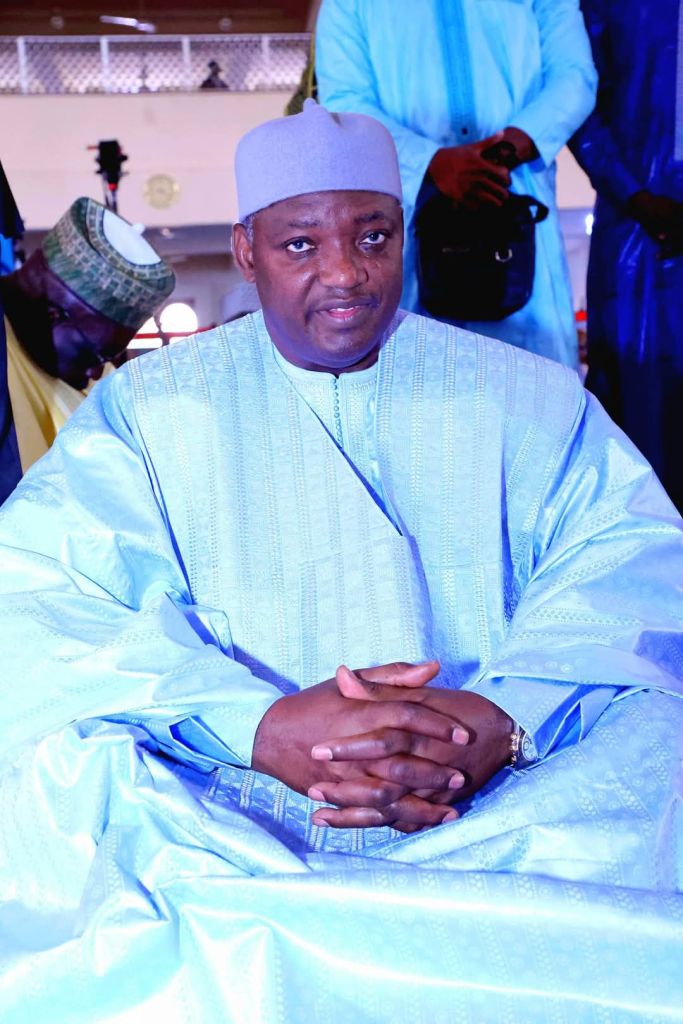
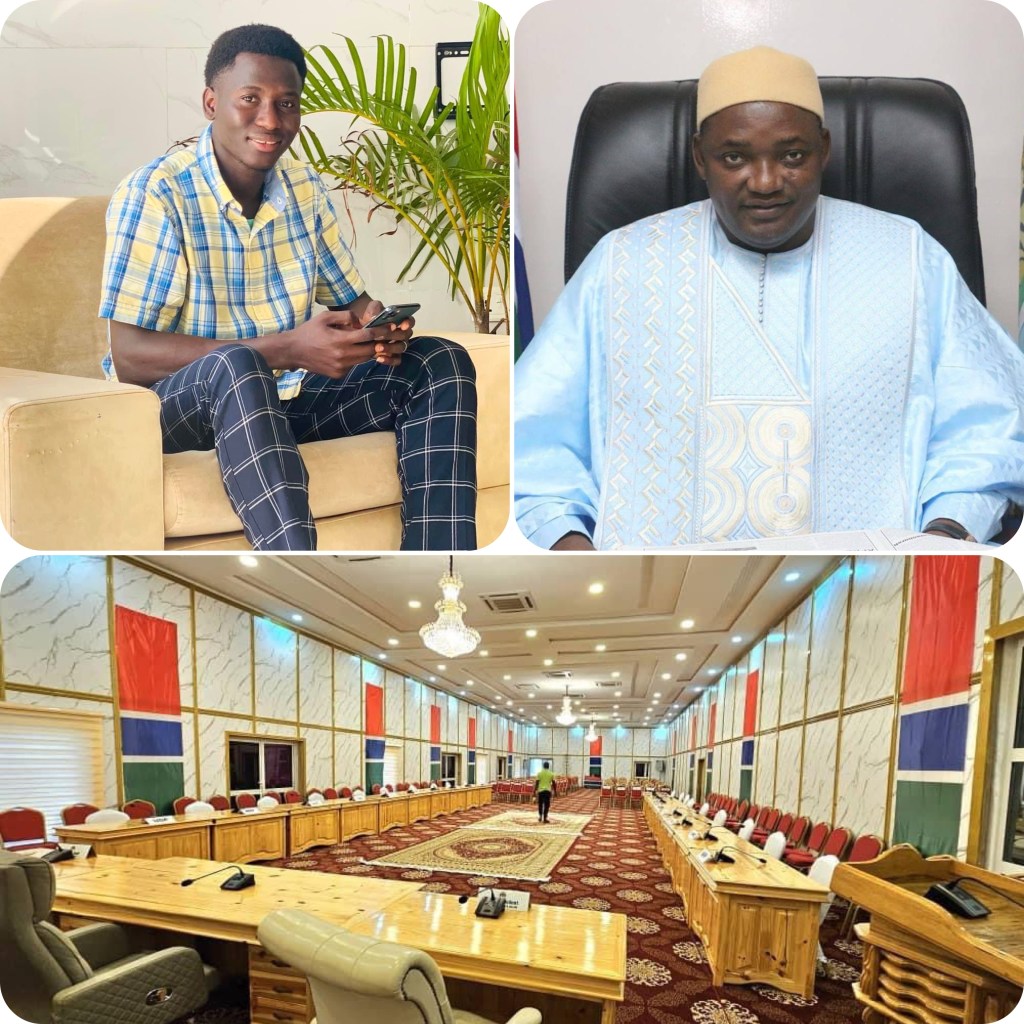
President of the Republic of The Gambia, Adama Barrow

Something is evidently awry, and it appears that our nation is adrift in its identity. It is disheartening to witness our state institutions representing and favoring only a select few. The police, originally intended to be the protectors of the public, have now ventured so far as to abet corruption and embezzlement. This situation is indeed fraught with complexity.

Even in lower-leaguer nations such as Uzbekistan or Tajikistan, the police are entrusted with the responsibility of safeguarding the lives and properties of the people. I reiterate, that is the core of their professional mandate.

President Barrow’s threats of re-arrest, even after individuals have been released on bail by the courts, coupled with the police executing these unlawful tactics to fulfill the president’s desires, paints a crystalline picture that our police force is systematically operating in allegiance to the president.

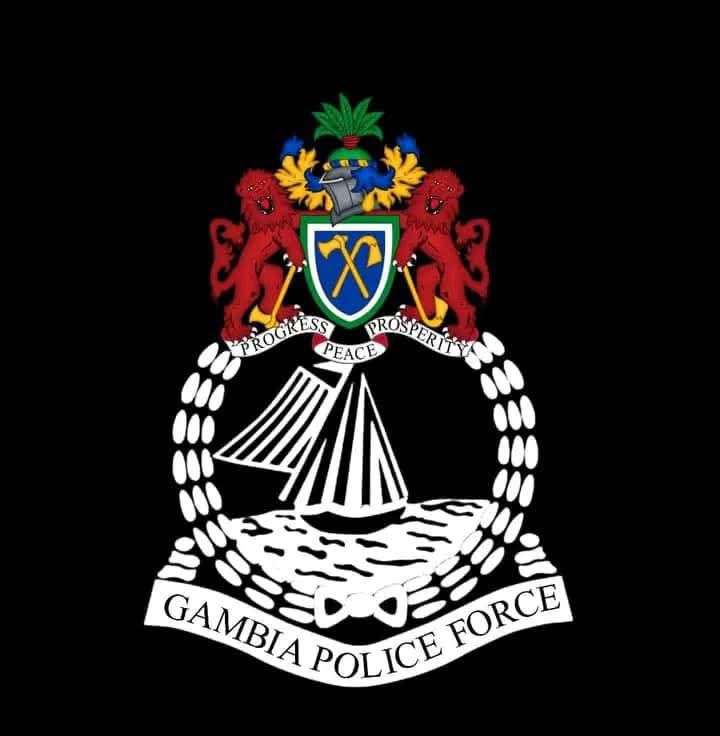
Official crest of the Gambia Police Force

Since the last presidential election, the actions of the police suggest that they are working for the president rather than the state, potentially metamorphosing the police into an instrument of repression rather than a guardian of citizens’ rights. These actions profoundly challenge the foundational principles of justice and democracy and merit unequivocal condemnation.

It is imperative for the police to be reminded that their allegiance should lie with and among the average Gambians, not to suppress or deny them their rights. Just as it is the right of the masses to apply for permits, it is equally their right to be issued a permit if they meet the stipulated conditions.

Note: I am not anti-police; rather, my stance is against police corruption, brutality, and any form of unprofessional conduct.✌🏿❤️

— Salutations and respect to every dedicated police officer out there. Thank you for your service.😊

THE STATE HOUSE DIALOGUE

By: Abdallah Khabib Jallow

In the midst of grandiose demagoguery rallies, propaganda campaigns, and divisive political banter marked by ill tactics aimed at scoring political points, it is imperative that genuine dialogue be reclaimed by the people.

The aforementioned political machinations, characterized by dirty tricks and tactical posturing for political gain, may serve the interests of politicians who, in the end, find solace in victory. However, one must question the fairness of these maneuvers when considering their impact on the masses.

A leader who, during campaign fervor, stood atop a podium making grand promises, only to later justify such rhetoric by stating, “In politics, when campaigning, you can say whatever you like to win elections,” raises concerns about the sincerity and ethical standards of the highest office. Such a statement befits a crook more than a president entrusted to lead the affairs of the average Gambian.

Any meaningful national discourse should prioritize the concerns of the ordinary citizens who have been wronged, deceived, and manipulated. In the current state of our nation, a Social Dialogue, tripartite in nature, should involve the government, political parties, and the average Gambians who deserve acknowledgment and redress.

It is demoralizing that the president seems unwilling to prioritize the youth through critical legislation, targeted stimulus bills, and initiatives aimed at job creation and crime reduction. The insistence on orchestrating a dialogue within the confines of State House, under the president’s terms, raises doubts about its sincerity and suggests a self-serving agenda rather than a genuine commitment to national reconciliation. The president’s demeanor indicates nothing but that this dialogue is more of a showbiz spectacle than a sincere effort to address the nation’s challenges.

The Imperative of Genuine Institutional Development over Superficial Dialogues

By Ousman Ceesay..

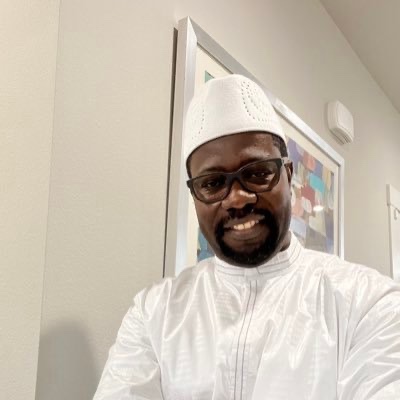
American-based Gambian Political Commentator..

In the wake of the multifaceted challenges plaguing The Gambia, it has become increasingly evident that mere calls for unity, symbolized by the notion of “kumbaya,” will fall woefully short in addressing the underlying issues. Rather, what is urgently needed is a concerted effort to establish and fortify robust institutions capable of safeguarding against the whims of both misguided populists and aspiring dictators. President Adama Barrow’s recent proposal for a National Dialogue, juxtaposed with his inaction towards empowering the citizenry through constitutional reform, sheds light on the true nature of his motives—an opportunistic power play masquerading as reconciliation.

At the heart of the matter lies the crucial distinction between superficial gestures of unity and substantive institutional reforms. While the former may offer temporary appeasement, true progress can only be achieved through the latter. President Barrow’s National Dialogue initiative, devoid of any tangible efforts to bolster democratic structures, serves as a stark reminder of the dangers inherent in prioritizing optics over substance.

Central to the discourse is the aborted attempt to enact a new constitution—a document poised to empower the Gambian people and curb executive overreach. President Barrow’s failure to advance this critical reform underscores his reluctance to relinquish control and embrace genuine democratic principles. Instead, his insistence on orchestrating a dialogue under his terms and within the confines of State House reeks of self-interest, rather than a sincere commitment to national reconciliation.

Moreover, the efficacy of any dialogue hinges on the establishment of mutually agreed-upon terms and a level playing field for all participants. By unilaterally dictating the terms of engagement, President Barrow undermines the very essence of dialogue, reducing it to a mere spectacle designed to consolidate his power.

In contrast, a meaningful dialogue necessitates a transparent and inclusive process—one that empowers all stakeholders to actively participate in shaping the nation’s future. This demands a departure from top-down approaches towards governance and a genuine embrace of participatory democracy.

Furthermore, the call for dialogue should not serve as a pretext for political maneuvering or the consolidation of power. Rather, it should serve as a catalyst for genuine reform and national renewal. President Barrow’s apparent disregard for this principle only serves to exacerbate existing divisions and erode public trust in the political process.

In conclusion, the myriad challenges facing The Gambia demand more than mere platitudes and superficial gestures of unity. To truly address these issues, there must be a concerted effort to establish and strengthen democratic institutions capable of withstanding the test of time. President Barrow’s call for National Dialogue, devoid of substantive reforms, serves as a sobering reminder of the urgent need for genuine institutional development. Only through such endeavors can The Gambia chart a course towards a brighter and more inclusive future for all its citizens.

When the Eagle dares the Elephant’s flight, but the Elephant ain’t a jet!

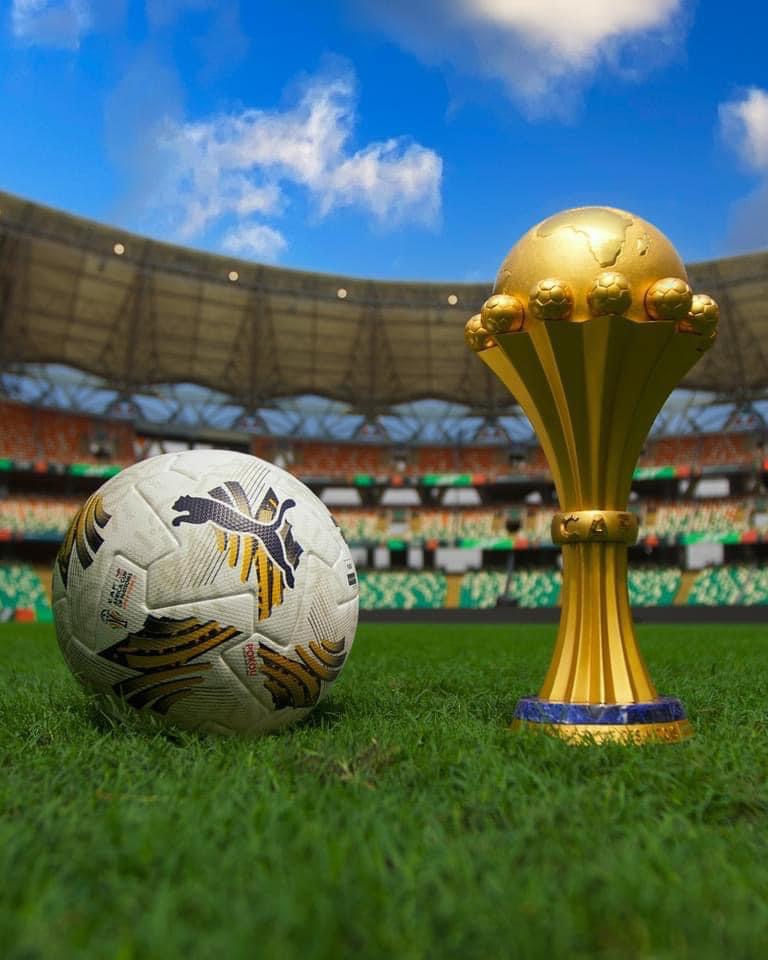
AFCON Trophy..🎖️

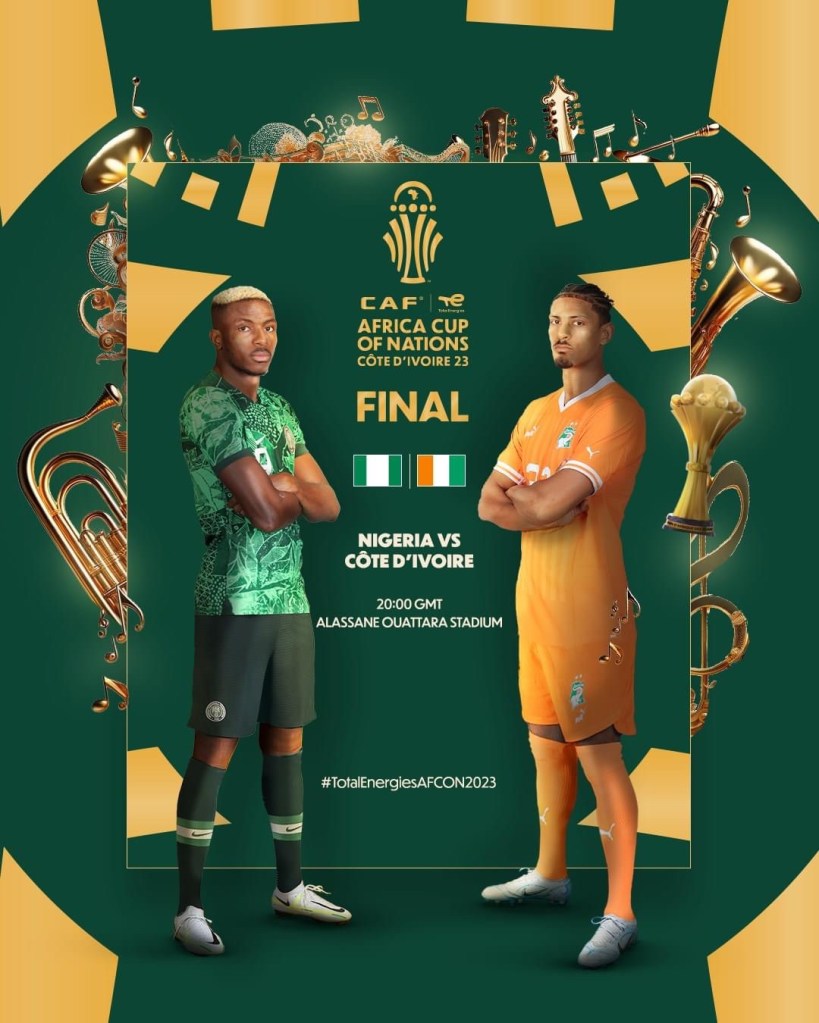
For the fifth time this century, the finalists of an Africa Cup of Nations (AFCON) have emerged from the same group, although on this occasion neither of them actually topped Group A! Drawn as the ‘home team’ for this final but with the majority of the 60,000 spectators in Abidjan’s Alassane Ouattara Stadium against them, Nigeria have already demonstrated they know how to silence a hostile crowd when they defeated host nation Ivory Coast 1-0 at this very venue last month.

That was to be the first of five consecutive games at this tournament in which they didn’t concede a single goal from open play, illustrating where their strengths lie in their pursuit of a fifth AFCON crown. It was a semi-final penalty shootout against South Africa that propelled them into their first AFCON final since winning the tournament in 2013, and they’ll be hoping to avoid a repeat of the previous AFCON to take place in Ivory Coast, when they finished as runners-up.

Even the most optimistic football fan from the Ivory Coast must have thought their AFCON dreams went up in smoke two weeks ago. The host nation scraped through a near-disastrous group stage campaign (W1, L2) in which they sacked manager Jean-Louis Gasset only to claim the 16th and last place in the knockouts. But they rallied to knock out reigning champions Senegal in the last 16, before a quarter-final win over Mali booked a semi-final date with DR Congo, who they beat 1-0 to secure just their second regulation time win of the entire tournament and book their spot in their first AFCON final since their 2015 title.

Victor Osimhen takes on Sebastian Haller..🇳🇬X🇨🇮

In doing so, the two-time AFCON champions became the first host nation since Egypt in 2006 to reach the final match of the tournament. Egypt lifted the trophy in that edition after a penalty shootout win over Ivory Coast, whose playing squad featured current caretaker manager Emerse Faé. Perhaps spurred on by the heartbreak of that final loss, and the recent defeat to Nigeria, Faé has been careful to assert that it’s not necessarily their ‘destiny’ to win a home AFCON. But as home nations have a 10-3 record in AFCON finals, they could hold a significant advantage!

Players to watch: Nigerian winger Ademola Lookman opened the scoring in two of their three knockout stage wins, whilst midfielder Franck Kessie is the only player to score for Ivory Coast in two 2024 fixtures.

Hot stat: All but one of the combined matches featuring Ivory Coast and Nigeria at this tournament produced under 2.5 total goals (excluding extra time).

[Analysis from Flashscore]

The Man Who Turned Doubters Into Believers: The Jürgen Klopp Legacy

By Abdallah Khabib Jallow.✍🏾

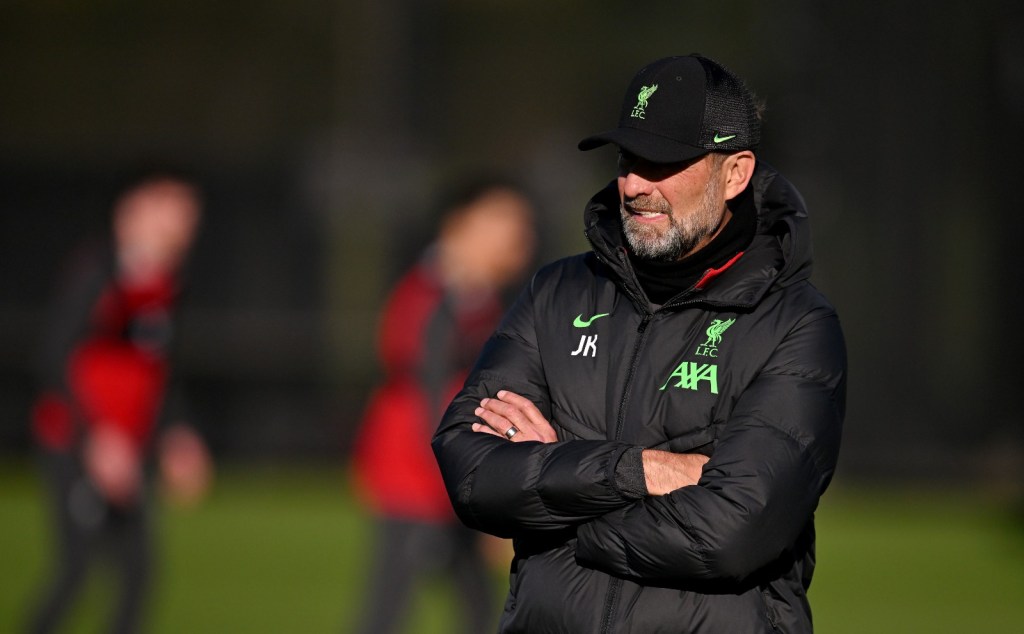
Once upon a time in the heart of Liverpool, a guy with wild hair and a vision strolled in, turning skeptics into hardcore believers. Jürgen Klopp, the charismatic German maestro, a wizard of charm and tactics, left his mark on Liverpool’s history. Now that he’s hanging up his tactical hat at the end of the season, the city’s still buzzing with his antics.

Jurgen Klopp🎖️

Klopp’s Liverpool tale kicked off in 2015 – a time when doubt was more abundant than tea in Merseyside. The Reds were desperate for a comeback, and there was Klopp, with his loud personality and footballing wisdom, ready to orchestrate a revolution. Sure, there were bumps in the road, but Klopp’s ‘We have to change from doubters to believers’ became the rallying cry for a new era.

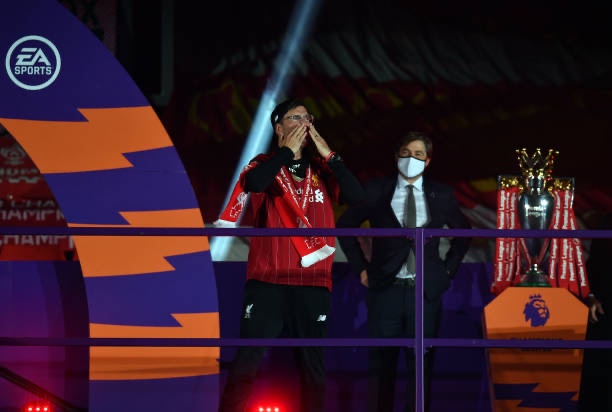
Klopp in dreamland after ending Liverpool 30-year title hunt..

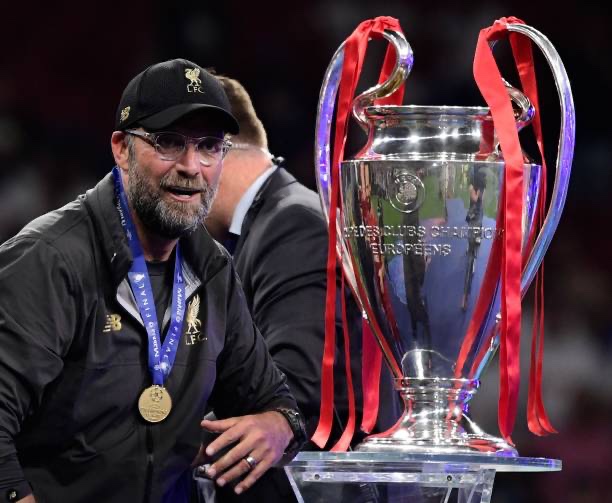
The real deal went down in 2019 when Liverpool bagged the UEFA Champions League, breaking a seven-year trophy dry spell. Klopp hugging his players wasn’t just about winning on the field; it was a journey from skepticism to full-blown belief.

Jürgen Klopp with the Uefa Champions League trophy, after he won it for Liverpool in 2019.

The pinnacle hit in the 2019-2020 Premier League season. Liverpool, armed with Klopp’s gegenpressing mojo and the team spirit he cooked up, finally lifted the Premier League trophy after a 30-year Netflix marathon. Anfield, echoing with ‘You’ll Never Walk Alone,’ watched Klopp tear up – a symbol of triumph over doubt and a great bit for the highlight reel.

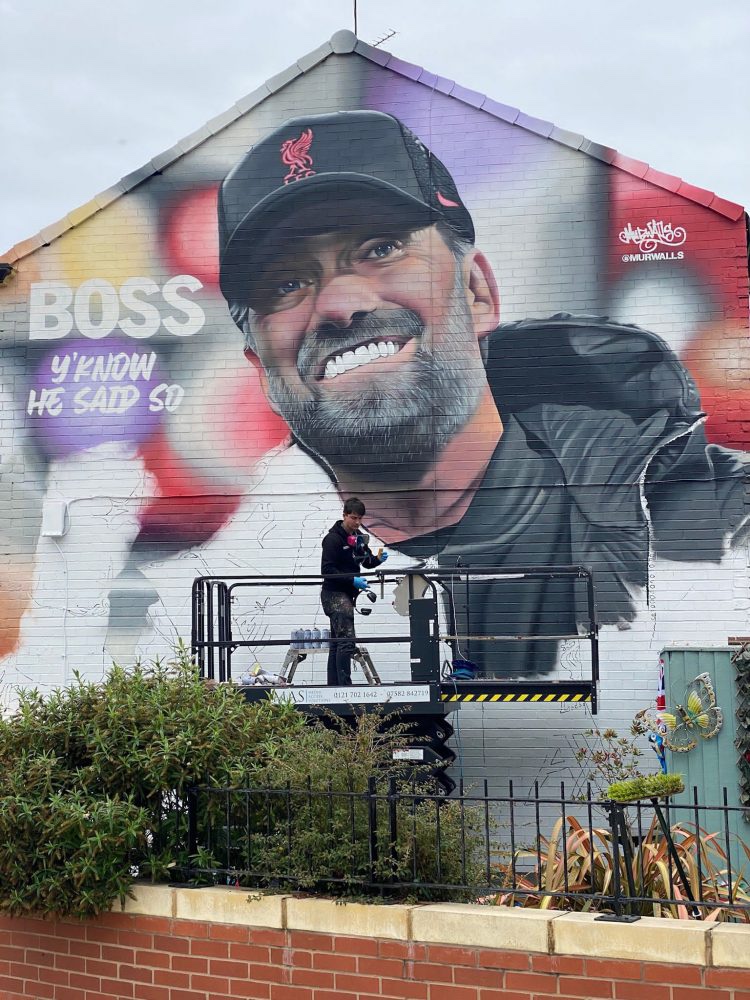
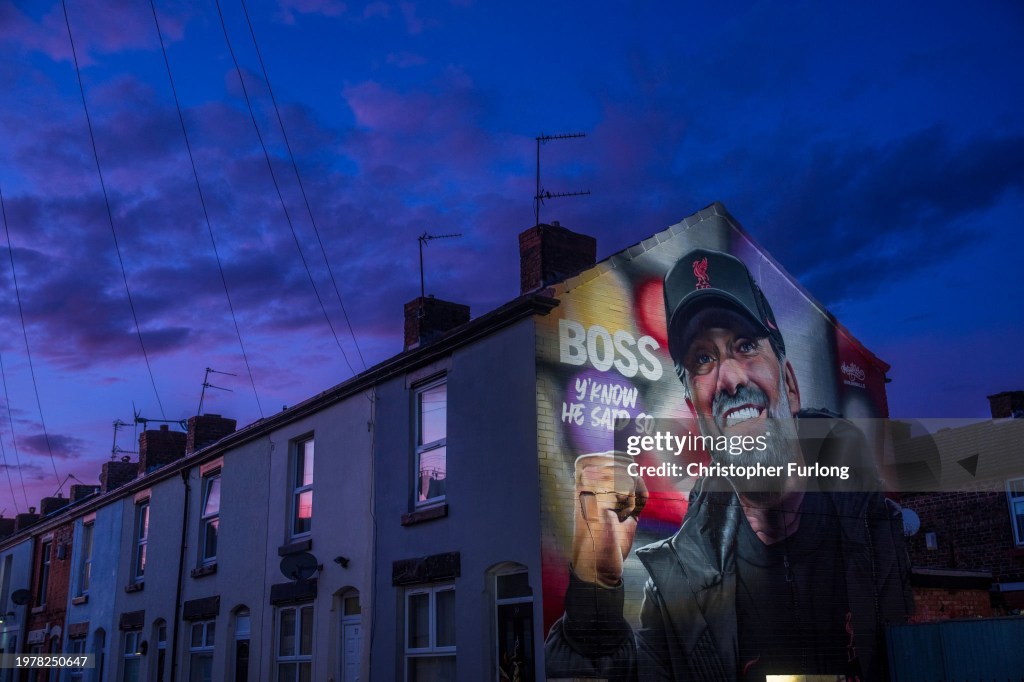
The Klopp mural just outside of Anfield.

Beyond the victories, Klopp’s Liverpool was all about resilience. The jaw-dropping comebacks against Barcelona and Borussia Dortmund weren’t just about football; they were about having a spirit that doesn’t quit.

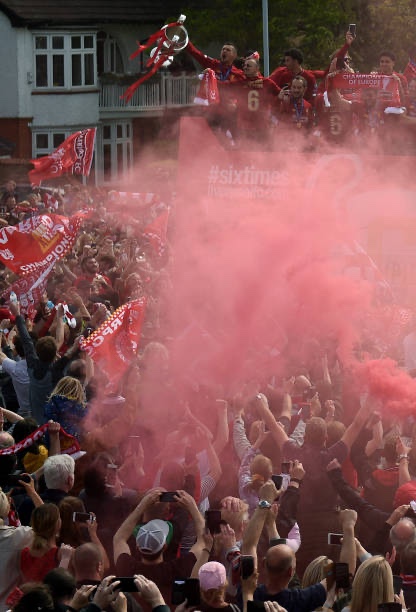
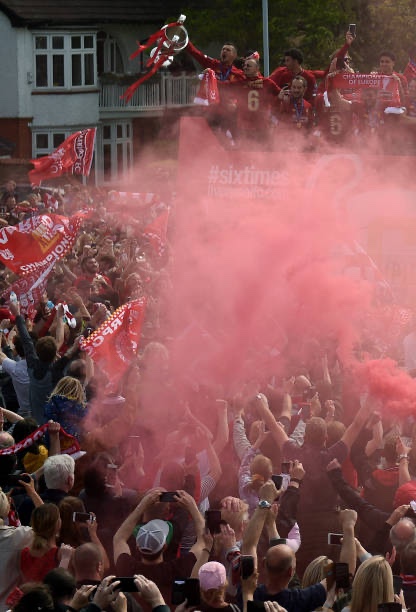
Liverpool fans welcome their stars after winning the Champions League for the sixth time.

As Klopp waves goodbye, the Kop is on the edge of a new era. The man who turned doubters into believers leaves behind a legacy of attacking brilliance, unbreakable spirit, and a bond between the team and the fans that’s almost a bromance.

A Klopp mural in the City of Liverpool..🖼️

Klopp’s Liverpool isn’t just about trophies; it’s about finding an identity, reigniting hope, turning skeptics into fans yelling, ‘Walk on! Walk on!’. The wild-haired German might be taking a break, but ‘You’ll Never Walk Alone’ will be echoing forever – a tribute to the guy who turned doubters into believers, leaving an indelible mark on the wild ride called football.

Facebook turns 20: From Mark Zuckerberg’s Harvard Dorm Room to the Metaverse.

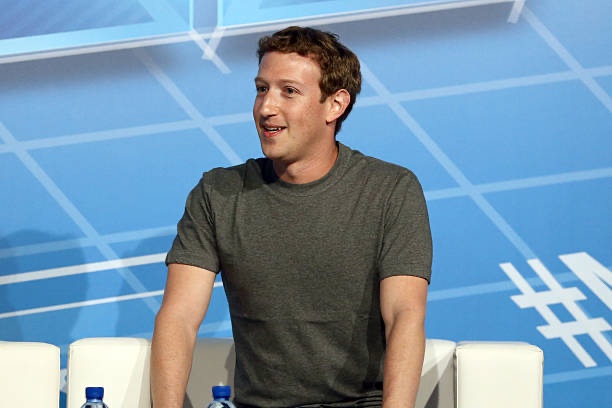
Facebook founder and CEO, Mark Zuckerberg.🎖️

In 2004, a young Mark Zuckerberg, fueled by ambition and innovation, launched a platform that would redefine social networking. From the humble beginnings in his Harvard dorm room, Facebook emerged as a global phenomenon, connecting billions worldwide.

Zuckerberg’s vision extended beyond just connecting friends; it aimed to create a digital space where ideas, stories, and cultures could converge. Facebook’s success story is a testament to its ability to adapt, innovate, and bring people closer in an ever-changing digital landscape.

As we celebrate 20 years, we reflect on Facebook’s transformative journey — from a college experiment to a powerhouse shaping the digital future. With eyes set on the horizon, Zuckerberg pictures Meta as the next frontier, where virtual realms will redefine how we connect and experience the world.

Mark’s indomitable spirit and daring tech brilliance transformed his dream into reality. The Metaverse has recently taken center stage, hosting major social platforms like Instagram and WhatsApp, acquisitions made by his company.

Even Mark’s youngest child would attest that his success story has surpassed wildest dreams. From what was supposed to be a mere college experiment, Facebook has evolved into a digital powerhouse, continually bridging the gap between people and ideas. Mark’s narrative is already one of the most inspiring in the world of entrepreneurship.

#Facebook20 #MetaverseJourney

Lewis Hamilton: Mercedes driver will join Ferrari in 2025 on a multi-year deal

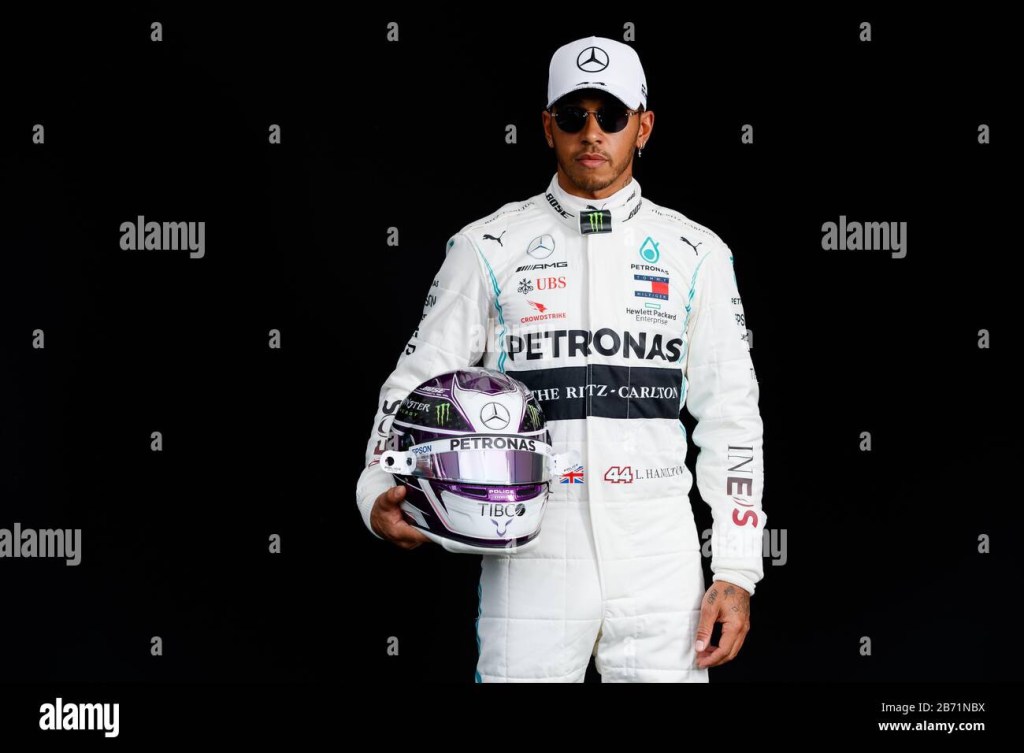
Seven time world champion Lewis Hamilton..🎖️

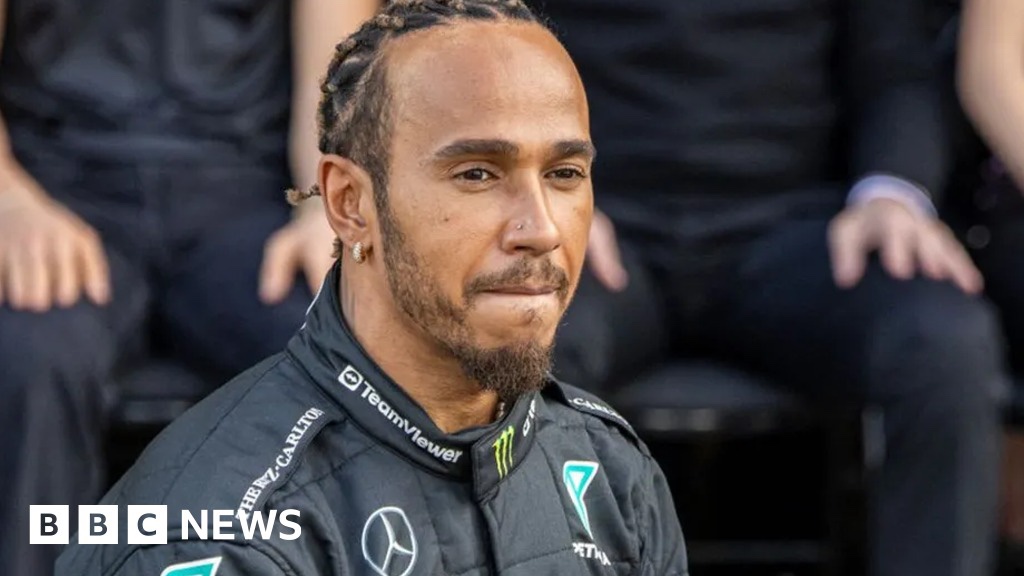
Lewis Hamilton will leave Mercedes at the end of the 2024 season and join Formula One rivals Ferrari on a multi-year deal in 2025.

The 39-year-old only signed a new two-year deal with Mercedes last summer.

However, it is understood his contract contained a break clause after one year, which the Briton has chosen to activate.

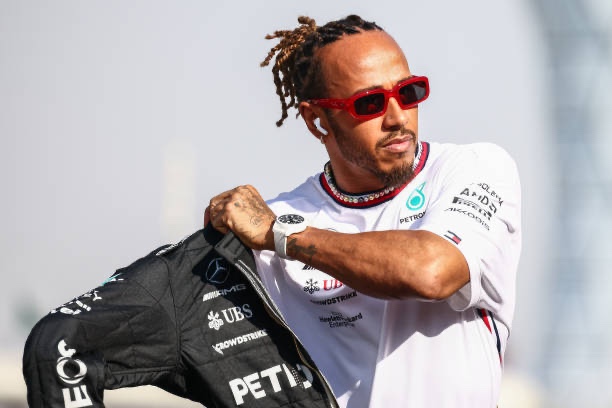
Lewish Hamilton 🌟

Hamilton said he was “so proud” of the success he had achieved in 11 years with Mercedes.

The seven-time world champion added: “Mercedes has been part of my life since I was 13 years old.

“It’s a place where I have grown up, so making the decision to leave was one of the hardest decisions I have ever had to make.

“But the time is right for me to take this step and I’m excited to be taking on a new challenge.”

Team principal Toto Wolff said the pairing of Mercedes and Hamilton “has become the most successful the sport has seen”.

“And that’s something we can look back on with pride,” he added.

Source: BBC

AFCON Marvel: Evidence Upsets Morocco, Sparks South Africa’s Cinderella!

13 h ago, Tom Thornton & Abdallah Khabib Jallow

In a tournament of giant killings, the highest-ranking survivors Morocco were sent home, as Evidence Makgopa’s goal in a 2-0 win saw South Africa reach at least the quarter-final stages for the third time in their last four Africa Cup of Nations (AFCON) appearances.

Evidence Makgopa celebrating with teammates after his goal.

Contrasting management styles were on show in San Pedro, as Hugo Broos – a 2019 AFCON winner with Cameroon – opted for eight Mamelodi Sundowns players in an unchanged lineup for a third consecutive game. It was six changes on the other hand for Walid Regragui’s side, with incoming Youssef En-Nesyri testing Bafana Bafana’s defensive resilience early on when the Sevilla man was flagged marginally offside as he darted in behind.

Ultimately, chances were few and far between in a naturally tense opening half, with Teboho Mokoena’s ambitious 40-yard effort causing Yassine Bounou a moment of panic as it bounced prior to meeting his gloves. The clear message at HT for pre-tournament favourites Morocco would have been more attacking intent, provided almost instantaneously as Azzedine Ounahi blazed over before Oussama El Azzouzi showed blistering pace going down in the box asking questions of referee Mahmood Ismail.

Teboho Mokoena’s well-bend free kick in the second half made it two nil..

The Sudanese official waved away the claims, allowing Bafana Bafana forward on the counterattack. Without a tournament goal so far, 23-year-old Makgopa sprung the offside trap, finishing well before wheeling away in celebration. There were fears that the Zulu dancing would be cut short through offside, but VAR saw no wrongdoing, leaving Walid Regragui’s side in unfamiliar territory, as they now had to fight from behind for the first time at AFCON 2023.

Morocco’s desperation turned to ecstasy soon, however, as they got a golden chance to level from the spot with time running out, after substitute Ayoub El Kaabi’s effort from close range struck the hand of Mothobi Mvala. Despite knowing little about it, a spot kick was duly awarded with Mvala receiving a harsh yellow card as a result. Moroccan talisman Achraf Hakimi had to wait an age for his chance, with the pressure proving too much as he crashed his effort against the crossbar.

Percy Tau jubilant after full time..

With Sofyan Amrabat seeing red for a bad foul in injury, the writing was firmly on the wall for a Morocco side now looking back on nearly 50 years without an AFCON title. To send them on the plane home with an added degree of hurt, Mokoena struck a beautiful free-kick goal into the top-left corner of Bono’s net to wrap up Bafana Bafana’s progress into the next round.

South Africa boss Broos will know that “nothing is impossible” with another big name gone, and they will now dare more than ever to believe that 28 years of hurt can end in just 12 days’ time.

Design a site like this with WordPress.com
Get started