Masks and Mirrors

– The Face We Show, the Truth We Hide –

They say black is gold. Black don’t crack. I never doubted that pride — it is woven into our history, our resilience, and our heritage. But pride becomes a hollow shield when our actions fail to reflect it.

Samba was bullied into silence — not for any crime, but for the crime of being born poor.

Jailaa carries the curse of her mother’s madness, condemned by a village that mistakes trauma for witchcraft.

And Fatima, well-cultured and soft-spoken, is forever unfairly judged through the lens of her mother’s misfortunes.

I can’t speak for how pure yesterday was, but this is the black community I find myself in today: a place where we inflict deep, unprovoked scars upon our own blood.

Depression: The Silent Alarm We Ignore

Societies shape human character through the values they choose to reward.

That is why the Chinese are economically disciplined. The Tibetan, spiritually grounded. The Amazonian, deeply contented.

Depression is real. Few in our modern world would dare deny its existence today. Yet we constantly misdiagnose its origin. The deepest roots of a person’s despair rarely grow from within the victim; they are planted, watered, and cultivated by their immediate circle.

And that is why bullying has become the new normal in our world of black today.

If you think bullying is just a verbal jab — you’ve already lost. The abuse we inflict through action is a hundred times heavier than any word.

Jutuneh’yaa. That single word broke the beautiful bond that allowed our grandparents to live in lasting peace and harmony.

The Bowl That Once Held Us Together

I am still a child of memory — lucky enough to have witnessed the twilight of an extraordinary era. I remember when fifteen to twenty different families shared a single rental compound. Each in their chambers, but all gathered around the same Aramissa bowly-baa at lunchtime.

What a profound beauty that was — a tradition now long dead, with little hope of return.

The spirit of the shared bowl has been crushed by arrogance.

Today, Omar and Tapha, born from the exact same womb, will not share a plate of beans for dinner. Why? Because Omar wears a suit to his white-collar bank job, while Tapha wears stained boots at the local car wash.

Even worse, the parents indulge in the same toxic belittlement. Instead of honoring honest labor, they point at the struggling son and dismiss him with a cold. And from the mouths — unlike those just two decades ago — we hear: “Tapha mang baraka.”

The Inverted Compass: What We Celebrate and What We Shame

Here is the raw, uncomfortable truth that society tries so desperately to hide, but which must be said out loud: this toxic culture of belittlement is the true root cause of the ever-growing “Back-way” epidemic.

We have warped our moral compass until our values are completely inverted.

Korka, a hardworking young man selling bitter-cola under the scorching heat at the Basse town centre, is dismissed by his own people as a “waste child.”

Bob, who fled illegally and peddles illicit drugs on the cold streets of Hamburg, is celebrated as a local hero the moment he sends money back home.

We mock the honest hustler at home and worship the ill-gotten gains of the diaspora, ignoring the reality of how it was earned. Through relentless belittlement, we drive our youth into desperation, pushing them to feel that their lives are meaningless unless they escape.

Us Blacks. Our society. Our double standards. Our relentless social cruelty.

We are to blame.

Not the waves. Not the distance. Not the West.

We are.

And until we heal our hearts and kill the spirit of Jutuneh’yaa, the ocean will continue to swallow our future.

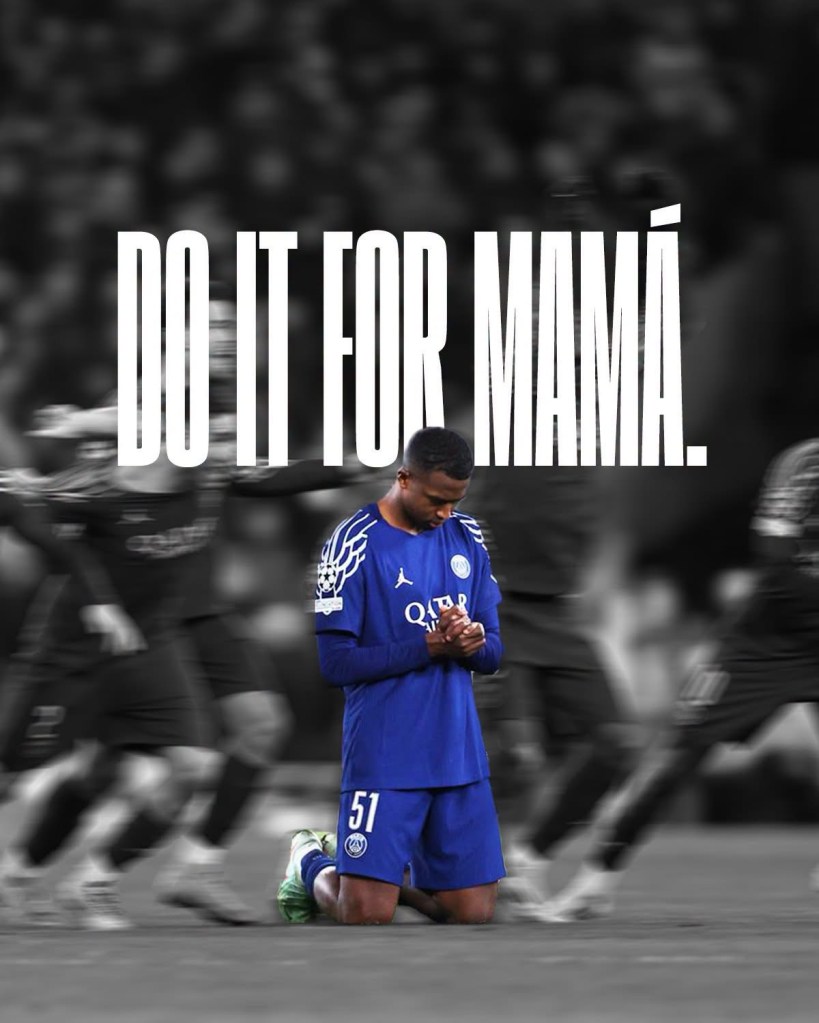
For Mamá. 🖤

Watching my mother’s feet as she danced bachata in our living room.

One two three, one two three.

I was maybe 8 years old. All I wanted was to dance with her.

Unfortunately, I was a terrible dancer. I spent months looking down at her feet, trying to imitate her.

I guess that’s how I learned how to use my feet.

I had no concept of what a “footballer” was. I just played.

One day, I got a call from home.

There was a problem.

I didn’t really understand much at first. I just heard “cancer” and I was really scared, but my mom said not to worry.

Then some time in 2019, we got a break, and I took a bus home to Quinindé.

When I saw her this time, she was so thin.

That night, I slept next to her in the bed, like when I was a child. When she fell asleep, I cried all night in silence so she wouldn’t worry.

A few months later, my coach told me that I was going to make my debut for the first team. I immediately called my mom to tell her the news, and she didn’t pick up. This was normal. She never had her phone.

I remember that I played very well. We got a clean sheet. I couldn’t wait to FaceTime her.

As I was leaving the pitch, my coach grabbed me by the arm and took me into a little room next to the dressing room with the team psychologist. I thought that they were going to congratulate me and tell me to stay humble. When they opened the door, my father and my brother-in-law were waiting for me.

What is going on?!

They told me that my mother was gone.

She passed away that morning.

They knew all day. Everybody. My coach, my family……

They kept it from me so that I could fulfill my dream. They thought that’s what she would have wanted.

I cried out in pain, like I’ve never cried before.

The only therapy that worked for me was time and football.

After her death, a strange thing happened. I lost all my fear on the football pitch.

I just kept telling myself, “You can’t let this depression win. Do it for Mamá. She would not want to see you crying.”

Instead of playing in my fears, I played with hunger. I ate the world.

Willian Pacho – Mamá, This Is for You, The Players’ Tribune

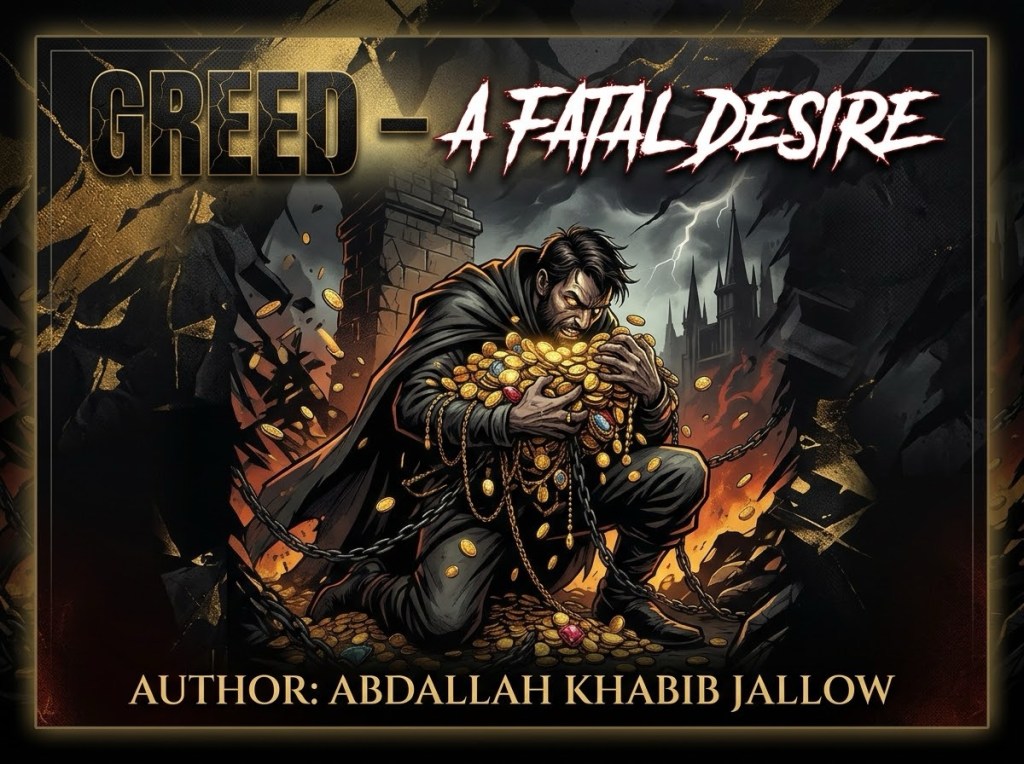
GREED – A FATAL DESIRE.

By Abdallah Khabib Jallow


I had a strange dream.

I was walking through a golden temple, beneath a dome of glass. And through chambers of splendor, filled with so many objects that the heart so desires. I saw miracles of human skill and artistry. And flawless beings who seemingly lacked nothing. But it appeared they were all searching for something. Such strange creatures.


There is somebody who tries to say you need this. There are enough people who think they need that. That is what the marketing strategy is — it always tells you that you shouldn’t be content.

Today, I go as far as to say it is a symptom of an illness.

I kept asking myself: Why are we like this?

We are caring and compassionate. But we are also egocentric and reckless. We give and we earn. We create and we destroy. What drives us?

I went in search of answers.

The Human Condition

Humans are, on the one hand, very similar to all other forms of life. We share a basic biological predisposition towards survival. But on the other hand, we are so smart that we actually recognize that we exist.

Being alive and knowing it is grounds for great joy. But it also carries a very terrible existential burden. If you know that you are here, you know that someday, like all living things, you won’t be here.

If that is all we thought about — I’m going to die. I may walk outside and get hit by a vehicle — we would literally be paralyzed by object terror.

What human beings did was to construct and maintain what anthropologists today call culture. All cultures offer some recipe for immortality. Either literally, through the heavens and afterlife and reincarnation of all the world’s great religions, or symbolically, through the belief that some vested identity will persist over time nevertheless.

That is why you want to have children. That is why we want to build pyramids. That is why we want to write great books and symphonies. That is why we want to have a whole lot of money.

Human beings are motivated to have a lot of stuff because psychologically, it gives them a sense that they may be living forever.

Desire, Greed, and the Struggle

Desire, greed, and the struggle that brings about anger and aggression — from the philosophical perspective, these are all resultant states of a person consistently trying to look at what is not true.

We talk about three fundamental truths. That things are impermanent. That the fundamental principle of everything is said to be emptiness. And the third truth: suffering.

We try to build something that makes us forget about this. We try to make things permanent. And that struggle creates suffering. We begin to then hang on to things.

I will give you an example. If I have a shirt, and every time I go out to do some shopping, I buy another shirt. I may have twelve in my closet, but I will buy the thirteenth — just so that I have a sense that I will live long enough to wear all thirteen shirts, or perhaps even more than that.

So there is a sense of everyday consistently doing something through which we may be able to more solidify our sense of immortality. Our sense of living continuously, not changing. And that struggle consistently builds up all this neurosis — and the prominent one of them becomes greed.

The Human Animal

An animal takes only what it needs. But the human animal is different.

More than seven billion of us populate the planet. And each of us desires something. Desires more. Is this perhaps the secret of success?

The Ego and Its Illusions

One day, a narcissist came upon a spring that was so clear that he could see himself in it as if in a mirror. When he saw his own reflection, he fell in love with its beauty.

We too like to see ourselves as the center of the world. The individual is the measure of all things. And so we yearn for recognition and self-esteem. We collect relationships, photos, and likes. SUVs, shoes, watches, records.

Are we like narcissists? Addicted to our own egos?

If you say you want to be true to the world, you have to get rid of all your “I’m’s.” When I say your “I’m’s,” I am talking about: I am this, I am that. I can do this, I can do that. Oh yeah, I did that last year. I’m better than him.

All those I’m’s are egos.

There are a lot of people in The Gambia — predominantly youths — who carry the ego badge on them. And they carry it high like a flag. Those are the people who we would see as the future bureaucrats of the country.

If you are driving into a poor neighborhood where people are starving to death, and you drive down with your BMW or Rolls Royce with your exhaust removed — that is the worst thing you could ever do. Driving with this ego to say, “I am better than you. You will never be where I am.”

Those people are lost.

The Greed Cycle

If I believe I have to assert my ego, the only way I can do that is through greed. I am forced to constantly incorporate something into myself that lends stability to my ego. Those can be material things, but they can also be spiritual things — for example, ideas like I am important or I am somebody due to money, fame, or my title.

Our entire modern world is based on this.

Greed destroys people. Why? Because it isolates us. And because greed is like a drug. The more I have, the more I want to have — because whatever I have no longer satisfies me. So it is not what I actually possess that satisfies me. It is the constant strive for more.

Religion has known for centuries that this drive lies within us humans. But the strive is also our ruin.

The Myth of Midas

Since time immemorial, there have been stories of people who could never get enough. People like King Midas. He asked Dionysus to grant him a wish — that everything he touched would turn to gold. Even his food and drink turned to gold. He starved and died of thirst.

Gold has always cast a spell of omnipotence and a whisper of eternity.

What, I ask myself, gives money such a powerful allure?

More Growth, More Affluence, More Contentment

More growth, more affluence, more contentment. This is the promise of those who mean well with us. And we are only too happy to believe them.

We do our part. But are we hoping to buy ourselves happiness?

We are attracted to anything that fosters life and pleasure. And we are afraid of anything that threatens that state of affairs.

There is nothing wrong with being a consumer. To stay alive, we have to consume things. But we have literally surrounded ourselves with stuff to the point where we become imprisoned in a gilded cage. We have become consumed with consumption.

We will keep buying stuff until the last drop of petroleum has been burned. It is fairly ominous, I will argue.

Can We Stop?

Are there other ways to feel happy and content? Can we simply stop being greedy by changing the way we think?

The answers may not be easy. But the question itself — and the courage to ask it — is already a beginning.

Greed exists everywhere. But it does not have to win here.

Why I Still Stand with Bafana, Even When It Hurts

The messages keep coming.

“How can you support South Africa after what they do to our people?”

“They kill our brothers and sisters, and you cheer for their team?”

“Are you not ashamed?”

I understand the anger. I respect it. I share it.

Yes, South Africa has a painful history of xenophobic attacks on fellow Africans. That reality cannot be ignored. It should not be excused. It must be condemned — loudly, clearly, and without hesitation.

I have done so. I will continue to do so.

But here is why, when the whistle blows and Bafana Bafana takes the pitch, I still stand with them.

Football Is Not the Government

When I support South Africa in sport, I am not endorsing its immigration policies. I am not defending its political leadership. I am not excusing the violence that has stained its streets.

I am supporting the players.

Young men who grew up in the same townships where poverty and struggle are daily realities. Players who carry the weight of a nation on their shoulders, knowing that for ninety minutes, they can unite a fractured people in a way that politicians never could.

They are not responsible for the sins of the state. They are responsible for the badge on their chest. And when they wear it with pride, they remind us of what South Africa could be — not what it too often is.

If We Apply That Logic Everywhere…

If we withheld our support from every country with a troubled past, we would have no teams left to cheer.

We would stop supporting England because of colonialism. We would stop supporting France because of its treatment of immigrants. We would stop supporting the United States because of its foreign policy. We would stop supporting Belgium because of Congo. We would stop supporting Argentina for its long-lived white supremacy. We would stop supporting Portugal because of its colonial legacy. That’s just a few to name.

But we don’t.

Because we understand that sport exists beyond politics. That the players on the pitch are not the politicians in office. That a nation is not a monolith — and that the actions of a few do not erase the humanity of the many.

Two Truths Can Coexist

I support Bafana Bafana. And I condemn xenophobia wherever I see it.

Both are true. Both must be true.

Because loving Africa means loving all of it — even the parts that still hurt. Even the parts that betray our shared humanity. Even the parts that make us angry.

We can celebrate the talent, the passion, and the resilience of South African football, while also demanding accountability for the violence and prejudice that have no place in a truly united Africa.

That is not contradiction. That is nuance. That is maturity. That is what it means to be African in a world that asks us to choose sides — when what we really need is to choose understanding.

A Final Thought

When Bafana scores, I celebrate. When an African brother or sister is attacked in Johannesburg, I mourn. When the team wins, I feel pride. When the nation fails its own, I feel shame.

That is not hypocrisy. That is humanity.

Because the Africa I believe in is not a perfect continent. It is a continent of contradictions, of pain, of hope — and of people who refuse to give up on one another.

So yes, I stand with Bafana. And yes, I stand against xenophobia.

And I will never apologise for either.

Four Minutes in Soma: The Sancho Chronicles.

Monday in Soma. Hot. Dusty. The kind of afternoon that drains you before kickoff.

Elite United traveled to face Suwokono FC — and for most of the game, it looked like a routine victory waiting to happen.

Captain Babucarr Charty had given them everything—a brace, one in each half. Two goals. Three points. A quiet ride back to Kombo seemed certain.

But football — a cruel poet — doesn’t read scripts.

Suwokono fought back. A 61st-minute strike dragged the hosts into the contest. 2–1. Nerves crept in. Then, in the 85th minute, a sucker punch. A leveler. Silence on the away bench.

Smiles gone. Heads down. The kind of silence that screams, “Here we go again.”

But the gaffer had other plans. And that plan had a name.

Muhammed ‘Sancho’ Gomez.

Introduced as a late substitute, the Barra-born wing wizard didn’t need time to settle. He needed four minutes. That’s all.

A flash of movement. A moment of ice in his veins. And just like that—Elite United were heading back to Greater Banjul with all three points, leaving Suwokono stunned on their own patch.

Fifth goal since the start of the second round.
Fourth consecutive match with a goal involvement.
Another late show from a man who thrives when the pressure is highest.

This post is a few days late. But the performance? Still ringing.

Four minutes in Soma. Another chapter in the Sancho chronicles.

Can’t stop. Won’t stop.

They needed a hero. Sancho delivered. Again.

My Unexpected Debate with the Kemet Community: A Journey From Confrontation to Clarity

By Abdallah Khabib Jallow

Introduction: How It All Began

It was an ordinary evening scrolling through TikTok when I accidentally stumbled into a live stream that would spark days of intense debate and deep reflection. The host identified as part of the “Gambian Kemet community”—people who follow a modern reconstruction of ancient Egyptian spirituality.

I paused, curious. What did they believe? How did they see the world?

What started as simple curiosity turned into one of the most challenging and eye-opening conversations I have ever had about faith, identity, and truth.

The First Encounters

The live stream was packed—mostly Gambians in the diaspora—all deeply passionate about ancient Egypt, which they called by its original name, Kemet. They spoke reverently of ancestors and spirituality, and some accused Islam of stealing from their traditions.

I am a Muslim. I believe in Allah and His final messenger, Muhammad (peace be upon him). And I could not—would not—stay silent.

My fingers moved before my brain could stop them. I typed:

“Ancient Egypt was great, but Islam is the final truth from God. The Quran is preserved, scientific, and for all humanity—including Africa.”

The reaction was immediate. Comments flooded in. Some were curious. Others were hostile.

Meet “Kemet Suwareh”

One member—apparently a high-ranking figure, if not the highest, within the movement’s Gambian cohort—became my main debate partner. For the purposes of this story, I’ll call him “Prophet.” He was intensely passionate, well-versed in Egyptian history, and unshakably devoted to Kemetism.

What followed was days of back-and-forth on everything from scripture to science. These are the highlights.

Part 2: The Core Arguments

On Scripture

I asked: “Where is the original Kemetic holy book? Which text do you consider divinely revealed, like the Quran?”

He replied: “We don’t have one book. Our wisdom is in many texts—the Pyramid Texts, the Coffin Texts, the Book of the Dead.”

I responded: “If there is no single revealed book, how do you know which parts are true? The Quran was revealed, preserved, and memorized by millions since day one. Can you say the same?”

He did not answer.

On Monotheism

He claimed: “Monotheism began in Africa during Akhenaten’s reign.”

I acknowledged: “You are right that Akhenaten promoted the worship of one god—the Aten. But he worshipped the sun disk itself. Muslims worship the Creator of the sun. And his religion died with him. Islam lives on in 1.9 billion hearts.”

On Worship vs. Honor

He argued: “We don’t worship the sun. We honor it as a manifestation of the divine.”

I challenged: “Your ancestors built temples, made offerings, and prayed to Ra. If that is not worship, what is? Words alone do not change history.”

On Race and the Quran

He made a serious accusation: “The Quran associates blackness with sorrow and punishment. Why do Black people follow it?”

I responded with facts:

“Those verses describe emotional reactions—faces darkening with grief—and use metaphorical language about the Day of Judgment. They have nothing to do with skin color.

If Islam cursed blackness, why was Bilal, a Black Ethiopian, chosen as the first caller to prayer?

The Prophet himself said: ‘No white person has superiority over a black person, nor a black person over a white person, except through piety.'”

On Islam in Africa

He claimed: “Islam came to Africa through conquest and fear.”

I corrected him:

“Islam spread in West Africa through trade routes, not armies. Kings like Mansa Musa embraced it voluntarily.

Timbuktu became a center of learning because Africans chose Islam, not because they were forced.”

Part 3: The Turning Point

After many exchanges, something shifted. He stopped defending Kemet and started attacking Islam directly.

He said: “Africans have more peace in Christian countries than in Muslim ones.”

I knew this was an emotional argument, not a factual one.

I replied:

“Rwanda is 93% Christian. Tell me how peaceful it was in 1994.

Senegal is 96% Muslim and one of Africa’s most peaceful nations.

Peace is not determined by religion alone—it is shaped by justice, governance, and history. Islam teaches justice for all.”

Then I brought him back to the original topic:

“But let us return to Kemet. You still have not shown me one fulfilled prophecy, one preserved scripture, or one miracle from your ancestors’ religion. Why?”

He never answered.

Part 4: What I Learned

This debate taught me several valuable lessons.

1. Know Your Facts

Before debating, I studied. I learned about Akhenaten, the Pyramid Texts, Bilal ibn Rabah, and the history of Islam in Africa. Knowledge is power—and it builds credibility.

2. Stay Respectful

There were moments when I wanted to respond with sarcasm or anger. But I remembered the Quranic command:

“And argue with them in a way that is best.” (Quran 16:125)

Respect does not mean backing down. It means speaking truth with dignity.

3. Listen First

Some of his points contained kernels of truth. Akhenaten did attempt to introduce a form of monotheism. Ancient Egypt was indeed a great civilization. Acknowledging what is true builds trust and opens hearts.

4. Know When to Stop

When debate becomes personal attack, it is time to exit. I ended with:

“I have shared what I believe. May Allah guide us both to truth. Peace.”

5. Make Du’a

In the end, only Allah guides. My role was to share the message clearly and respectfully. The rest is between Him and every heart.

Part 5: An Invitation to You

If you are reading this and you are curious about Islam, I invite you to do what I did: investigate sincerely.

· Read the Quran with an open heart.

· Learn about the life of Prophet Muhammad (peace be upon him).

· Examine the scientific miracles, the fulfilled prophecies, and the perfect preservation of the Quran.

Do not follow ancestors blindly. Do not follow emotions blindly. Follow the evidence.

And if you have questions, ask respectfully. I am always open to dialogue—not to win arguments, but to seek truth together.

Final Reflection

As I closed my TikTok app that night, I thought about something he said early in our debate:

“You’ve been programmed.”

I smiled. If questioning, researching, and choosing Islam after examining the evidence is “programming,” then I pray more people are programmed the same way.

I did not win every exchange. But I planted seeds. And seeds, with Allah’s permission, can grow into mighty trees.

“And say: ‘Truth has come, and falsehood has departed. Indeed is falsehood, by nature, ever bound to depart.'”

(Quran 17:81)

Have you had similar experiences? Share your thoughts in the comments below. And if you are seeking truth, do not stop until you find it.

𝐓𝐡𝐞 𝐔𝐧𝐬𝐩𝐨𝐤𝐞𝐧 𝐏𝐫𝐞𝐣𝐮𝐝𝐢𝐜𝐞 𝐃𝐫𝐢𝐯𝐢𝐧𝐠 𝐀𝐦𝐞𝐫𝐢𝐜𝐚’𝐬 𝐖𝐚𝐫𝐬

By Abdallah Khabib Jallow

When Hamas militants crossed into Israeli territory on October 7, killing and capturing civilians, Israel launched a military campaign in response. America supported it unequivocally. More than 85,000 Palestinians—mostly innocent civilians—have since been killed.

When Iran recently launched a retaliatory strike against American and Israeli targets—a response to the bombing of an elementary school that killed over 150 children—the White House reacted with outrage. When coordinated operations escalated to target Iran’s Supreme Leader, Ayatollah Ali Khamenei, in what was sold as a “regime change” operation, Washington celebrated.

Here is the uncomfortable truth that few dare speak aloud: If Iran were a Jewish state or a Catholic state, rather than an Islamic Republic, there would never have been a chance—not in history, not in the present—for an American war against it.

This is not a defense of any regime. It is an indictment of the selective morality that governs Western foreign policy. It is an acknowledgment that the wars we wage, the civilians we mourn, and the leaders we demonize are filtered through a lens of religious and cultural prejudice that has become impossible to ignore.

𝐓𝐡𝐞 𝐂𝐚𝐥𝐜𝐮𝐥𝐮𝐬 𝐨𝐟 𝐂𝐚𝐬𝐮𝐚𝐥𝐭𝐲

Consider the numbers. When Israeli civilians die, the world mourns. When American soldiers are threatened, the superpower mobilizes. But when 85,000 Palestinians are killed—when children are pulled from rubble, when hospitals are bombed, when families are erased from civil registries—the response from Washington is not outrage. It is arms shipments. It is vetoes at the United Nations. It is the language of “self-defense” stretched so thin it becomes transparent.

This is not about security. It is about whose lives are deemed grievable and whose are written off as collateral.

𝐓𝐡𝐞 𝐈𝐫𝐚𝐧 𝐄𝐱𝐜𝐞𝐩𝐭𝐢𝐨𝐧

Now examine the case of Iran. For decades, American foreign policy toward Tehran has been defined by hostility that transcends any rational strategic calculation. Yes, the 1979 hostage crisis left scars. Yes, Iran’s regional behavior merits scrutiny. But the virulence, the permanence, the almost theological quality of American opposition to Iran cannot be explained by policy differences alone.

Imagine, for a moment, if Iran’s state religion were Judaism. Would American presidents still speak of “wiping Iran off the map”? Would Congress vote with such unanimity for sanctions? Would the threat of military action hang perpetually in the air? The question answers itself.

The hostility is not merely political. It is civilizational. It is the product of a deep-seated Islamophobia that permeates Western institutions, media, and strategic thinking—a conviction that an Islamic power, by definition, cannot be a legitimate power.

𝐓𝐡𝐞 𝐍𝐞𝐰 𝐇𝐢𝐭𝐥𝐞𝐫𝐬

This is what makes the current moment so dangerous. In Donald Trump and Benjamin Netanyahu, we have leaders who understand this prejudice and exploit it. They speak of existential threats, of civilizational clashes, of good versus evil—knowing that their audiences will fill in the blanks with their own assumptions about Muslims and Arabs.

They are the architects of a new global order in which some nations have the right to defend themselves and others do not. Some civilians deserve protection and others do not. Some leaders are statesmen and others are targets for assassination.

History will judge them. But it will also judge those who stood silent while this selective morality became the basis for war.

𝐀 𝐂𝐚𝐥𝐥 𝐟𝐨𝐫 𝐇𝐨𝐧𝐞𝐬𝐭𝐲

We must begin calling things by their names. This is not a war on terror. It is not a defense of Western values. It is a conflict driven, at its core, by the belief that Muslim lives matter less. That Islamic states have no right to sovereignty. That the only acceptable Middle East is one in which every power answers to Washington or Tel Aviv.

If we cannot name this prejudice, we cannot confront it. And if we cannot confront it, we will continue to watch children die—not in spite of our values, but because of the ugly selectivity with which we apply them.

𝐀 𝐑𝐞𝐜𝐤𝐨𝐧𝐢𝐧𝐠 𝐨𝐟 𝐅𝐨𝐫𝐜𝐞: 𝐓𝐡𝐞 𝐇𝐨𝐥𝐥𝐨𝐰 𝐕𝐢𝐜𝐭𝐨𝐫𝐲 𝐢𝐧 𝐕𝐞𝐧𝐞𝐳𝐮𝐞𝐥𝐚

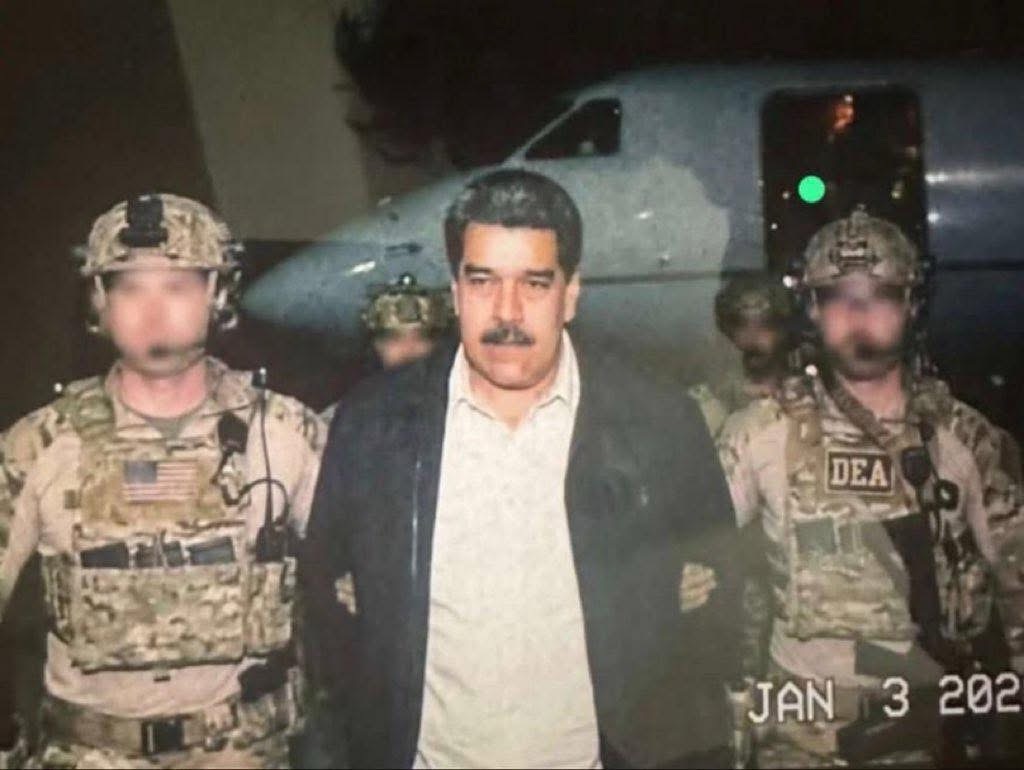
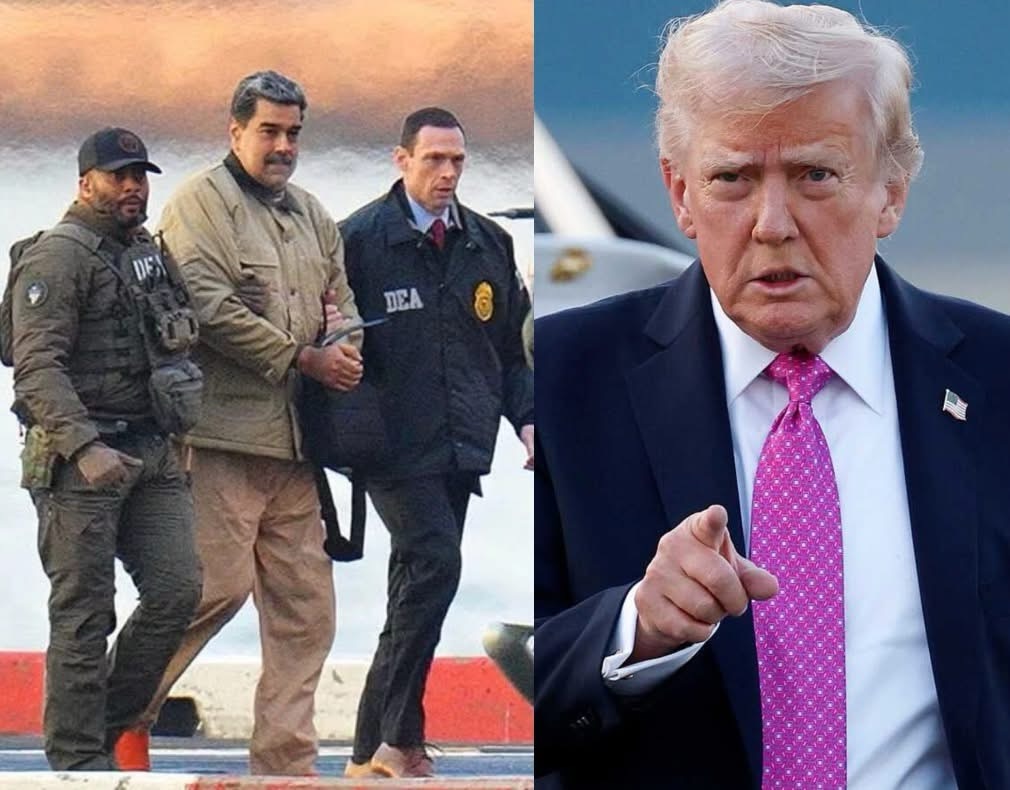
Hours after his forcible extraction from Caracas, a subdued Nicolás Maduro touched down on U.S. soil, flanked by two stone-faced DEA officers—a leader reduced to a prisoner in the space of a flight.

The capture of Nicolás Maduro is being packaged as a triumph—a decisive blow struck by the strong against the defiant. Yet to those who have watched the long arc of American intervention, this moment feels less like an end and more like a familiar, tragic prologue.

The Trump administration’s sanctions and the operation against Maduro are presented as necessary, moral actions. But history whispers a caution: we have seen this before. From Saddam Hussein’s capture to the fall of Tripoli, the same script plays out—the swift spectacle of force, followed by the long, untelevised unraveling. The notion that removing one figure ends a crisis ignores the complex realities on the ground, where power vacuums invite chaos, and regional actors like Colombia’s ELN wait in the wings.

This action, justified under the banner of democracy and stability, lays bare a deeper contradiction. As voices from Rep. Thomas Massie to protesters in Barcelona highlight, there is growing dissent, even within America’s own political landscape, against endless foreign interventions. The question is not whether the U.S. military can topple a government—it has proven it can—but whether it can build anything lasting in its place. From Iraq, Vietnam to Libya, the answer has been a devastating no.

Moreover, the selective outrage reveals a uncomfortable hypocrisy. The same government that acts as prosecutor and judge abroad overlooks profound moral failings at home. As one critic starkly put it, the U.S. has “committed more war crimes than humanitarian aid.” This is not an anti-American stance, but a plea for consistency: a nation cannot claim moral leadership while its actions perpetuate cycles of violence and instability.

For months, a drumbeat of threats from Donald Trump culminated in a pre-dawn raid: the arrest of Venezuelan President Nicolás Maduro inside his Caracas residence.

The solidarity expressed by Palestinians and others reminds us that this is not just about Venezuela—it is about a pattern. A pattern of intervention that rarely leads to liberation, often leads to ruin, and always reinforces a world order where sovereignty is conditional. The brute force of sanctions and strikes may bend a nation, but it cannot unite it, nor can it command lasting allegiance.

In the end, the capture of Maduro—who pleaded not guilty in a New York court—may prove to be a Pyrrhic victory. It may rally a base, it may project strength, but it does not address the fundamental truth: you cannot sanction a nation into stability, nor bomb it into democracy. The greatest threat to American power may not be abroad, but within—a loss of legitimacy, a growing domestic disillusionment, and the erosion of the very principles it claims to uphold.

The world is watching, and the verdict of history is often unforgiving. As one observer noted pointedly: The USA itself will destroy the USA. Not through foreign defeat, but through the endless repetition of its own mistakes.

In Opinion — By Aldallah Khabib Jallow

The Coin Toss That Started It All: How a Quiet Afternoon in Kerr Jatta Wrote Gambian Football History

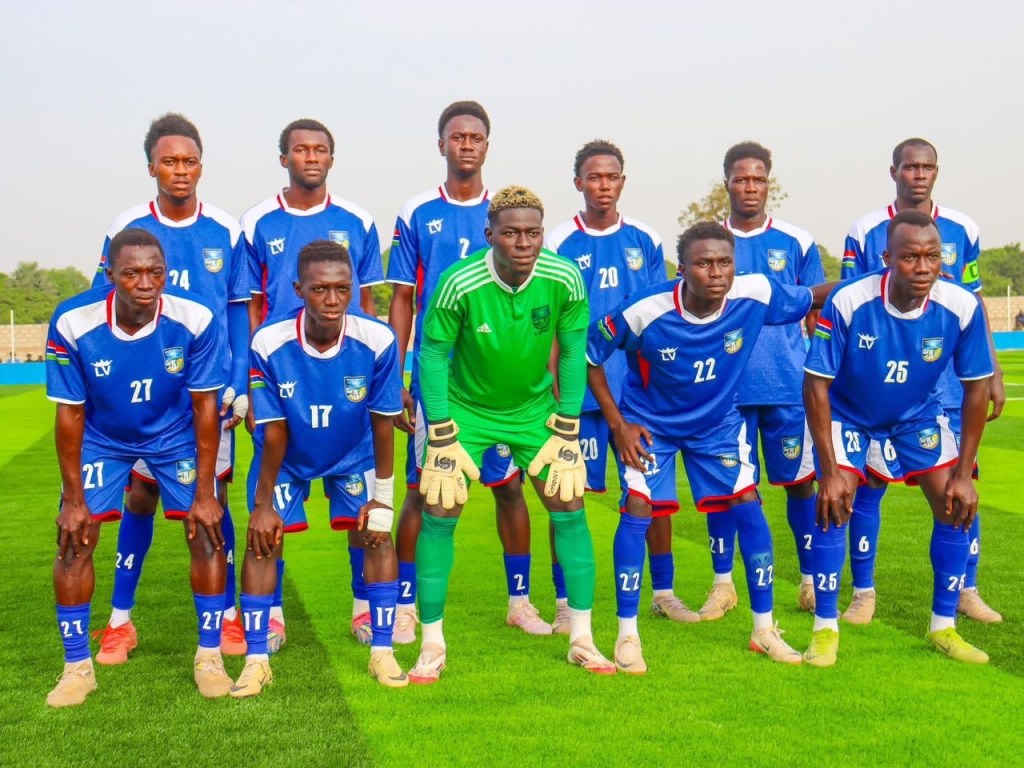
North Star Academy FC is currently competing in its first-ever league season, having earned promotion after just one year since the club’s establishment.

KERR JATTA, NORTH BANK REGION – The air at the North Star Academy Complex didn’t just feel different on Friday afternoon—it sounded different. There was a new hum beneath the familiar rustle of the trees, a collective inhale from hundreds of proud locals who had come not just to watch a football match, but to witness the birth of an era.

This was the moment the North Bank Region had been waiting for: its first-ever Gambia Football Federation (GFF) sanctioned league match. Not an exhibition. Not a friendly. A proper, points-on-the-line, GFF Division Two fixture. For decades, elite Gambian football had been a story written in Banjul, Bakau, and Brikama. On this day, the narrative officially added a new setting: Kerr Jatta.


The Weight of a Spinning Coin

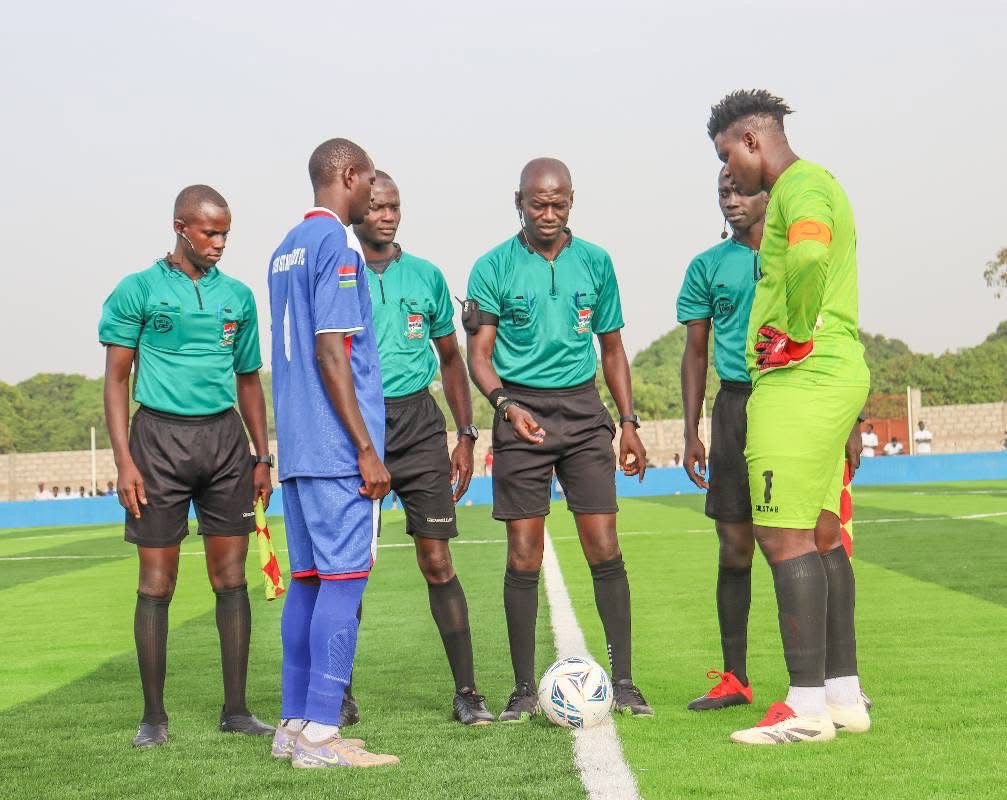
Heads or tails? The two captains watch the referee toss a coin before kickoff.

The gravity of the occasion was palpable from the very first ritual. At the center circle, the two captains—one from the historic home side, North Star Academy FC, and one from the visiting Colley Stars—stood shoulder-to-shoulder, their eyes locked not on each other, but on the referee’s hand. A coin spun in the golden afternoon light, a tiny, metallic arbiter of fate. In that silent, suspended moment, more than just ends were being decided. The entire weight of regional aspiration—years of development, community investment, and raw sporting hope—seemed to hang in the balance alongside that falling coin.

This was the quiet before the storm. The whistle that followed wouldn’t just start a game; it would unlock a door.


“A Monumental Step”: The Official Word

The significance was not lost on those steering the region’s football destiny.

“This is a monumental step for football in the North Bank,” stated Mr. Yaya Sey, 2nd Vice President of the NBR Regional Football Association, his voice brimming with the pride of a promise fulfilled. “Hosting a GFF league match isn’t just a fixture on a calendar. It’s a signal. It tells our youth that the highest level of the game is no longer a distant dream seen on television, but a tangible goal right here on their soil. It provides a visible platform for our local talent and inspires the next generation of players, coaches, and, most importantly, believers.”

His words framed the day not as an endpoint, but as a cornerstone.


This fixture marked the first-ever GFF-sanctioned league match to be played in the North Bank Region, graced by hundreds of proud local fans who witnessed the historic occasion.

The Match: A Tactical Foundation, Not a Firework Show

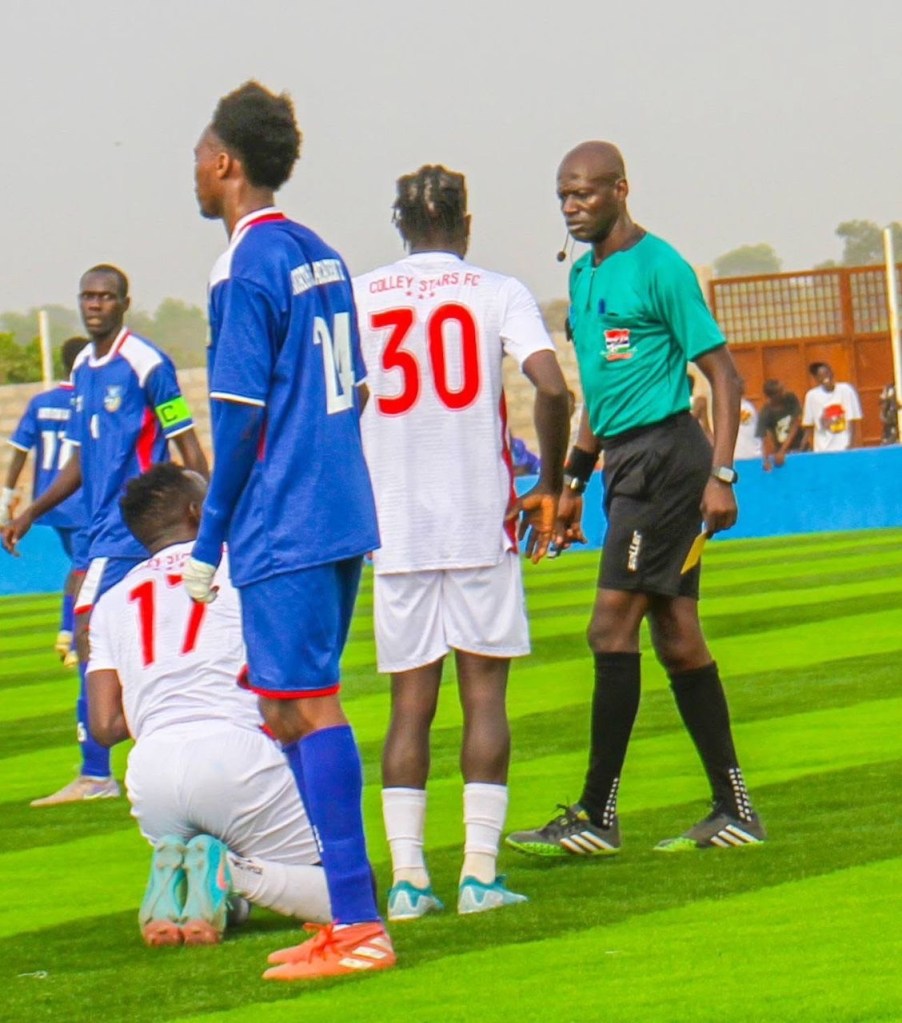
The 90 minutes that unfolded were less a spectacular fireworks display and more a careful, deliberate laying of a foundation. In a tense, tactical affair, the home side, buoyed by the occasion, controlled possession and probed for openings. Colley Stars, seasoned and pragmatic, erected a disciplined, compact defensive wall.

Chances came and went—a near-post header saved, a fizzing drive skimming the crossbar. The final touch of quality in the attacking third remained elusive for North Star. When the referee blew the final whistle, the scoreboard read 0-0. A draw. A single point.

But to view the result through a simple lens of points would be to miss the forest for a single tree.


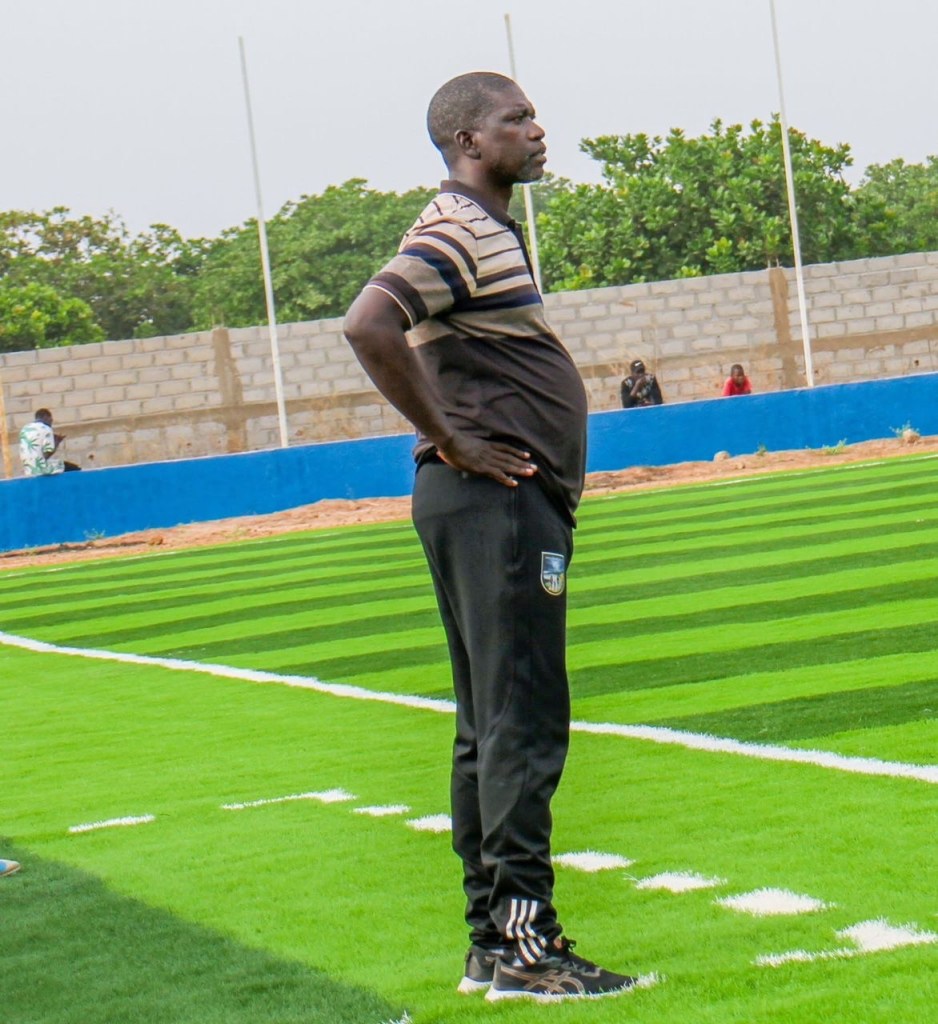
CEO and Head Coach Ebou Jarra is looking to put his definitive mark on this year’s GFF Division Two campaign.

The CEO’s Vision: A Veteran’s Blueprint Realized

For Mr. Ebou Jarra, CEO of North Star Academy Football Club, the score was almost a secondary detail. The day was the culmination of a vision crafted by the former Gambia Armed Forces and Real de Banjul veteran—a dream of building a lasting football ecosystem from the grassroots up.

“Today was not just about the result,” Jarra reflected, his gaze sweeping across the departing crowd. “It was about making history and planting a flag. Our vision at North Star has never been to just exist. It has always been to build a sustainable football ecosystem here, from the grassroots to a professional standard. Hosting this match is a testament to that commitment. It’s a statement to our community and to the nation: we are here, we are building, and this is a promise of more top-level football to come for the North Bank Region.”

His statement cut to the heart of the matter. This was about legacy, not just logistics.


The Echo of the Final Whistle

As the sun dipped lower, painting the complex in long shadows, the true result became clear. The historic staging was a resounding success. It was a critical, tangible step in the GFF’s mission to decentralize the sport’s elite structure—to move the game beyond its traditional heartlands and plant it in fertile new soil.

The match proved that a pathway for talent now has a visible, local entry point. It proved that passion for the league game burns just as bright outside the urban centers. It proved that “if you build it, they will come” applies to football pitches in the North Bank as surely as anywhere else.

The foundation, as they say, is laid.

North Star Academy FC, in their inaugural league campaign, now turns the page. The next chapter is already scheduled: a Tuesday clash against Gunjur United at the same hallowed ground. The fight for the region’s first league win begins. But whatever happens, they will be fighting on a pitch that is now, officially and irrevocably, part of Gambian football history.

FROM WHERE I STAND — ROY SAWH

Roy Sawh arrives in London, mobilises against racism in Moscow

Chapter Three

And so on a misty March Sunday in 1958 Roy Sawh arrived in Britain with the wonderful knowledge that he had come to “do well”, and would soon return to Guyana a rich man and relieve his mother once and for all of the continual anxiety of where the next slice of bread would come from.

“I expected to return to Guyana within two or three years with bags of money and a world of knowledge. I could already envisage in my mind’s eye the scenes on my return to Uitvlugt.
“Tell us about the Houses of Parliament, Roy. The Queen? The Crown Jewels.” I was not really afraid. Was I not knowledgeable with English and about English history? The Wars of the Roses. The Restoration. Good Queen Bess. The Thirty Years’ War. I considered it part of my history as well. That’s how I rationalised my coming to England.”

His first shock in Britain, which he now regards in retrospect as a joke, was when he saw a white man – a porter – carrying luggage at Victoria main line railway station. He could not believe his eyes, and if that was real he did not believe that he was in London. “I had been brought up to regard such menial jobs as being above the white man. Only black people did that kind of work in Guyana. I was so flabbergasted that I went up to a bobby and asked him whether I was in London!” More surprises were forthcoming when he saw the elderly white women cleaning and sweeping toilets as lavatory attendants. “I got scared atvthe anonymity of the whole thing. It was something completely new to me.”

The friend who was supposed to have met him at the station never turned up. Just as he was becoming worried and afraid, a Jamaican befriended him, listened to his story and took him to Riverside Road, Stoke Newington, to stay with him. “It was very natural, I felt, for a black man to approach me and befriend me. It was like back home. If a white man had approached me I would have been terrified.”

So with thirty shillings in his pocket Roy became another resident in one of London’s back streets. He was told to register at the Labour Exchange and after filling in some forms, and producing his passport he got unemployment benefit. “I could not understand it. Here was I looking for a job and then getting some money for not having a job. The only thing I could say was ‘what a great country’. I did not have any hang-ups then about receiving dole, as I would now. I had not applied for it and at first I thought they must have made a mistake.”

His first experience of racial discrimination came when he had to look for accommodation. Landladies had suddenly “let their room earlier” when they saw him after assuring him on the ‘phone half an hour before that they had vacancies. “It is only now I know it was racism. At that time I thought it was my fault. Maybe I had not heard correctly. My English was probably not so good and they might have heard incorrectly.”

I did not mind. I thought I was the one who was in the wrong. I can see now why so many black people accept racism. They are prepared to make excuses and bend over backwards to people who practise racism. It is still part of an inferiority complex and the colonial mentality.”

He was so disgusted and ashamed at leaving his job that he dared not write to his mother. “She would have sighed and said it was typical of me. It would seem as if I could not keep a let her decally Another iod as a clus followed, He spent ea walking from factory to factory looking for that job. It was a pleasant job which he held for three years. For the first time he had time to spare and used ioby enroling a night school for a
course in accountancy.

With plenty of time during weekends he used to visit “lively” spots in London. Piccadilly, St James’ Park and Hyde Park, places which gave him entertainment and cost nothing. At Speaker’s Corner, Hyde Park, he drifted towards the platform which had a black speaker who was a Communist Party member. “I saw this black chap with a C.P. banner and was intrigued. For the first time in my life I was going to see and listen to a live communist. It was exciting and something like forbidden fruit. In Guyana, according to folklore, communists were very bad. Little did i know the effect this experience would have on me.”
As he listened to the speaker analyse society and its ills, he convinced me that he came from Guyana. “What he said seemed to apply so correctly to my country. He spoke of racism and colonialism and showed how the colonial powers like Britain were exploiting the colonies.” This was his first introduction to a Marxist analysis of society.

The next Sunday he again hurried to Speaker’s Corner and this time asked the speaker whether he could also speak. “I could not say a thing at first. Apart from being heckled, I was dumbstruck. Nothing seemed to come out from me. It was as if I was in shock. But worse still, I suddenly realised that I had nothing to say. I was humiliated.” That Sunday, and everyday afterwards, he bought newspapers and started reading them greedily. He joined a library and read Colin Cross’ book The Fall of the British Empire which described colonial exploitation in detailed form. This made a deep impact on him. “No other book shaped my thinking like Cross’ book.” A new horizon was opening for him. He met new friends at the classes he was attending at night school. “We used to discuss things, how we felt, what were our problems and experiences. I started for the first time to realise that our problems were all the same — difficulties in getting a job, accommodation and racism.”

He could not understand why English people seemed so prejudiced, especially when he remembered how whites on the sugar estates – which they mostly owned – were concerned about black people, where they lived, the jobs they had: ney seemed so reasonable then. He wondered whether it was because black people were now in their country, and were a threat to them, that they discriminated against them. “I did not know. It was new to me. I thought maybe we were in the wrong. I still could not analyse the reasons.”

He read more books, and concentrated on those dealing with politics and economics. At about the same time his contacts among black people grew, and so did the realisation that there was a lot amiss in British society. He could sympathise and listen to complaints by his fellow black people, but could do nothing. “I felt I was powerless to do anything constructive. It was like a nightmare to me. But what could I do? I could see no answer and my vision was not clear enough to attempt anything. So the next best thing I did was to try to develop myself. That is, I wanted to know more about life. What made things go in a particular direction. I developed an insatiable appetite for reading. For asking questions, for listening.” With this new lust for knowledge and information, his interest in accountancy sagged. He became more interested in public administration. “I had the vague idea that would help me in my relations with people.”

During the summer more black people emerged into the open from their winter hibernation. Hyde Park and other public places once more became Roy’s haunt. From the number of people who were congregating around his platform he realised that he was getting good at the game of public speaking. He gained more confidence and sensed the power that there was once you had the audience in your grasp. To maintain the interest of his audience he had to keep up with current events. He spent more time reading newspapers. He also cultivated a group of friends, mostly from the West Indies, but especially from Barbados. “They seemed to be around more often, interested and more articulate than other Westin-dians. Their discussions always seemed to end with the same conclusion – that black people were having a bad time in Britain and that it was the result of colour prejudice.

In 1961 he joined the British Guyana Freedom Association, which was Marxist in orientation. He was very pro-Moscow in philosophy. They discussed issues like independence in Guyana, which road Guyana was taking and whether violence was the only way out for Guyana. “Talks used to go on endlessly. They were very academic. We had plenty of time.” Then the next year he saw an advertisement in a Guyana paper in which Guyanese were offered scholarships to study in the Eastern European countries. Although he says that he was prepared to do anything to get a scholarship and in that way to get into university, it seems more likely that going to university was a secondary reason. The first was the opportunity to get to Moscow. It was a popular period for black people to go to the Eastern European countries. Offered a scholarship and given the choice of three East European universities, he chose Moscow. He left his job without giving notice. His excuse: “My values had changed, I was more interested in education and not material things.”

Once he got to Moscow he settled in quickly. He became more popular, met students from other colonial countries and got to know more about their countries. Two weeks after his arrival at university he called on students to form an Afro-Asian group and promptly caused a furore with the suggestion.
The purpose, according to him, was for students to get to know each other better, to discuss the conditions in their countries and how to act collectively. “But I did not realise that I was indirectly challenging the establishment in Moscow. They did not like anything to be formed without their prior permission and active involvement.”
From then onwards things did not go very smoothly between him and the Soviet university authorities. Black students started to complain about racial discrimination. “This was something new to me. I could well understand racism in a capitalist country like Britain. But a socialist country like the Soviet Union was the last place I expected any. I could not get over this. The whole thing interested me. I started asking a crucial question. Was there any real difference between Soviet socialism and Western capitalism? The answer to that is there even today in his views of the Soviet role in world politics, which are often sharply critical.

His next confrontation was during a seminar on international affairs at the university. A Soviet official spoke on the Congo. Roy says he was convinced that the official was twisting facts to suit the Soviet position. “I knew something about the situation in the Congo, having taken an active part in the various pro-Congo activities in London. All the official said was contrary to what I knew to be the situation. It was racist talk.” He started to ask embarrassing and leading questions.
“People realised that he was either not telling the truth or he did not know what he was talking about. The lecturer and I ended up in an argument. I hit the desk and walked out. I wasn’t going to sit there, after all my experiences of racism in Britain, and listen to all that nonsense about my brothers and sisters in the Congo.”

The next day he was called before his protessor and told that his behaviour was unbecoming. He was also told that by walking out and thumping the desk he showed a lack of courtesy. “I had to rebuke him”, he says. “Did Nikita Kruschev not thump the rostrum at the United Nations so hard with his shoe that his wristwatch broke? Surely that was not discourtesy, it was a way of lodging a protest. The professor was very annoyed. I think mainly because he had not known that Kruschev behaved like that at the U.N.” It seems more likely that the professor was annoyed at Roy drawing a parallel between his (Roy’s) behaviour and that of the leader of the mighty Soviet Union.

Racial discrimination increased on the campus. Roy orga-nised the student leaders and together they brought the students out on strike, boycotting the lectures and the canteen.
“I am reluctant to talk about that period. But I think that it was an important phase in my life. It made me more sceptical about strict Marxist philosophy when propounded by whites.” There was the Larrisa incident. Apparently a black student married a Russian girl, took her to Africa and then, it was alleged, sold her to some chiefs who abused her. The girl it seems “staggered naked to the Soviet Embassy” and reported what had happened to her. She was then sent back to Moscow.
This story was doing the rounds in Moscow with disastrous effects for black-white relations.

A deterioration in the relations between black and Russian students resulted. Black students were beaten up by Soviet “teddy boys”
and the Ghanaian government stopped sending students to that particular university in Moscow. “It was a cold war period, and the Soviet authorities were not lifting a finger to put a stop to these happenings. “Things got so bad that you felt that every ordinary Russian in the street saw every black man as a direct descendant of a monkey who was still in that primitive stage of development.”

Offensive articles appeared in the newspapers of the Komsomol – the Young Communist League. Roy was called to the Ghana High Commission and asked to drop his campaign. “I refused. How could I forget the whole thing, when I was studying there and was going to be there for the next five or six years? But his estimation was wrong. The Soviet authorities cabled Cheddi Jagan’s office in Georgetown, Guyana, and the reply was that they must expel him. He refused to go voluntarily and was physically put on a ‘plane to London and told “not to come back again”. They even packed his luggage for him.

“That was the sum total of my studies in Moscow and brought to an abrupt end my sympathy for the Soviet Union and all it stands for – which I realised was no different from the abuses of capitalism. It was a year of great education for me. It made me rethink my attachment to Soviet Communist orthodoxy
as I could not see how I could reconcile it to my blackness. The answer to racial discrimination did not lie there, I analysed.” Thus ended his short-lived flirtation with Soviet Communism.

So where did that leave Roy politically? “I did not reject Marxism as such”, Roy is eager to explain, “but I discarded Soviet Communist orthodoxy and dogmatism. I accept much of the economic and political analysis of Marxism, but I passionately believe that Marxism alone cannot deal adequately with all the problems faced by black people in this society. The answer must come from within the black community itself and from its actual experiences.” So back in London he once again became the Hyde Park orator. But this time with a difference.
He needed a political base.

Design a site like this with WordPress.com
Get started