By Abdallah Khabib Jallow
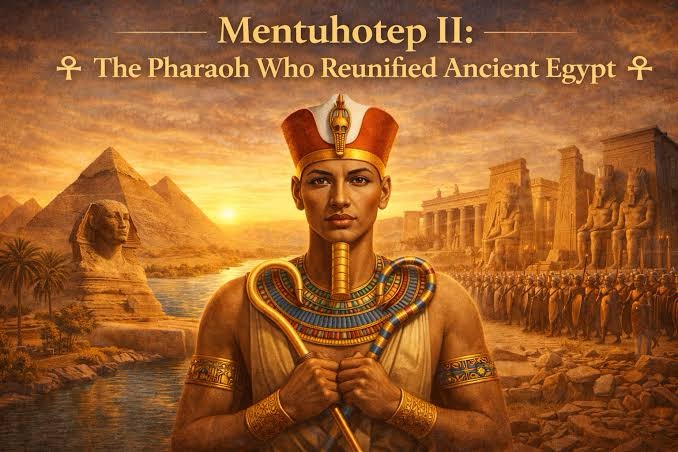
Introduction: How It All Began
It was an ordinary evening scrolling through TikTok when I accidentally stumbled into a live stream that would spark days of intense debate and deep reflection. The host identified as part of the “Gambian Kemet community”—people who follow a modern reconstruction of ancient Egyptian spirituality.
I paused, curious. What did they believe? How did they see the world?
What started as simple curiosity turned into one of the most challenging and eye-opening conversations I have ever had about faith, identity, and truth.
The First Encounters
The live stream was packed—mostly Gambians in the diaspora—all deeply passionate about ancient Egypt, which they called by its original name, Kemet. They spoke reverently of ancestors and spirituality, and some accused Islam of stealing from their traditions.
I am a Muslim. I believe in Allah and His final messenger, Muhammad (peace be upon him). And I could not—would not—stay silent.
My fingers moved before my brain could stop them. I typed:
“Ancient Egypt was great, but Islam is the final truth from God. The Quran is preserved, scientific, and for all humanity—including Africa.”
The reaction was immediate. Comments flooded in. Some were curious. Others were hostile.
Meet “Kemet Suwareh”
One member—apparently a high-ranking figure, if not the highest, within the movement’s Gambian cohort—became my main debate partner. For the purposes of this story, I’ll call him “Prophet.” He was intensely passionate, well-versed in Egyptian history, and unshakably devoted to Kemetism.
What followed was days of back-and-forth on everything from scripture to science. These are the highlights.
Part 2: The Core Arguments
On Scripture
I asked: “Where is the original Kemetic holy book? Which text do you consider divinely revealed, like the Quran?”
He replied: “We don’t have one book. Our wisdom is in many texts—the Pyramid Texts, the Coffin Texts, the Book of the Dead.”
I responded: “If there is no single revealed book, how do you know which parts are true? The Quran was revealed, preserved, and memorized by millions since day one. Can you say the same?”
He did not answer.
On Monotheism
He claimed: “Monotheism began in Africa during Akhenaten’s reign.”
I acknowledged: “You are right that Akhenaten promoted the worship of one god—the Aten. But he worshipped the sun disk itself. Muslims worship the Creator of the sun. And his religion died with him. Islam lives on in 1.9 billion hearts.”
On Worship vs. Honor
He argued: “We don’t worship the sun. We honor it as a manifestation of the divine.”
I challenged: “Your ancestors built temples, made offerings, and prayed to Ra. If that is not worship, what is? Words alone do not change history.”
On Race and the Quran
He made a serious accusation: “The Quran associates blackness with sorrow and punishment. Why do Black people follow it?”
I responded with facts:
“Those verses describe emotional reactions—faces darkening with grief—and use metaphorical language about the Day of Judgment. They have nothing to do with skin color.
If Islam cursed blackness, why was Bilal, a Black Ethiopian, chosen as the first caller to prayer?
The Prophet himself said: ‘No white person has superiority over a black person, nor a black person over a white person, except through piety.'”
On Islam in Africa
He claimed: “Islam came to Africa through conquest and fear.”
I corrected him:
“Islam spread in West Africa through trade routes, not armies. Kings like Mansa Musa embraced it voluntarily.
Timbuktu became a center of learning because Africans chose Islam, not because they were forced.”
Part 3: The Turning Point
After many exchanges, something shifted. He stopped defending Kemet and started attacking Islam directly.
He said: “Africans have more peace in Christian countries than in Muslim ones.”
I knew this was an emotional argument, not a factual one.
I replied:
“Rwanda is 93% Christian. Tell me how peaceful it was in 1994.
Senegal is 96% Muslim and one of Africa’s most peaceful nations.
Peace is not determined by religion alone—it is shaped by justice, governance, and history. Islam teaches justice for all.”
Then I brought him back to the original topic:
“But let us return to Kemet. You still have not shown me one fulfilled prophecy, one preserved scripture, or one miracle from your ancestors’ religion. Why?”
He never answered.
Part 4: What I Learned
This debate taught me several valuable lessons.
1. Know Your Facts
Before debating, I studied. I learned about Akhenaten, the Pyramid Texts, Bilal ibn Rabah, and the history of Islam in Africa. Knowledge is power—and it builds credibility.
2. Stay Respectful
There were moments when I wanted to respond with sarcasm or anger. But I remembered the Quranic command:
“And argue with them in a way that is best.” (Quran 16:125)
Respect does not mean backing down. It means speaking truth with dignity.
3. Listen First
Some of his points contained kernels of truth. Akhenaten did attempt to introduce a form of monotheism. Ancient Egypt was indeed a great civilization. Acknowledging what is true builds trust and opens hearts.
4. Know When to Stop
When debate becomes personal attack, it is time to exit. I ended with:
“I have shared what I believe. May Allah guide us both to truth. Peace.”
5. Make Du’a
In the end, only Allah guides. My role was to share the message clearly and respectfully. The rest is between Him and every heart.
Part 5: An Invitation to You
If you are reading this and you are curious about Islam, I invite you to do what I did: investigate sincerely.
· Read the Quran with an open heart.
· Learn about the life of Prophet Muhammad (peace be upon him).
· Examine the scientific miracles, the fulfilled prophecies, and the perfect preservation of the Quran.
Do not follow ancestors blindly. Do not follow emotions blindly. Follow the evidence.
And if you have questions, ask respectfully. I am always open to dialogue—not to win arguments, but to seek truth together.
Final Reflection
As I closed my TikTok app that night, I thought about something he said early in our debate:
“You’ve been programmed.”
I smiled. If questioning, researching, and choosing Islam after examining the evidence is “programming,” then I pray more people are programmed the same way.
I did not win every exchange. But I planted seeds. And seeds, with Allah’s permission, can grow into mighty trees.
“And say: ‘Truth has come, and falsehood has departed. Indeed is falsehood, by nature, ever bound to depart.'”
(Quran 17:81)
Have you had similar experiences? Share your thoughts in the comments below. And if you are seeking truth, do not stop until you find it.
 TheHeraldWhistleBlower