By Abdallah Khabib Jallow
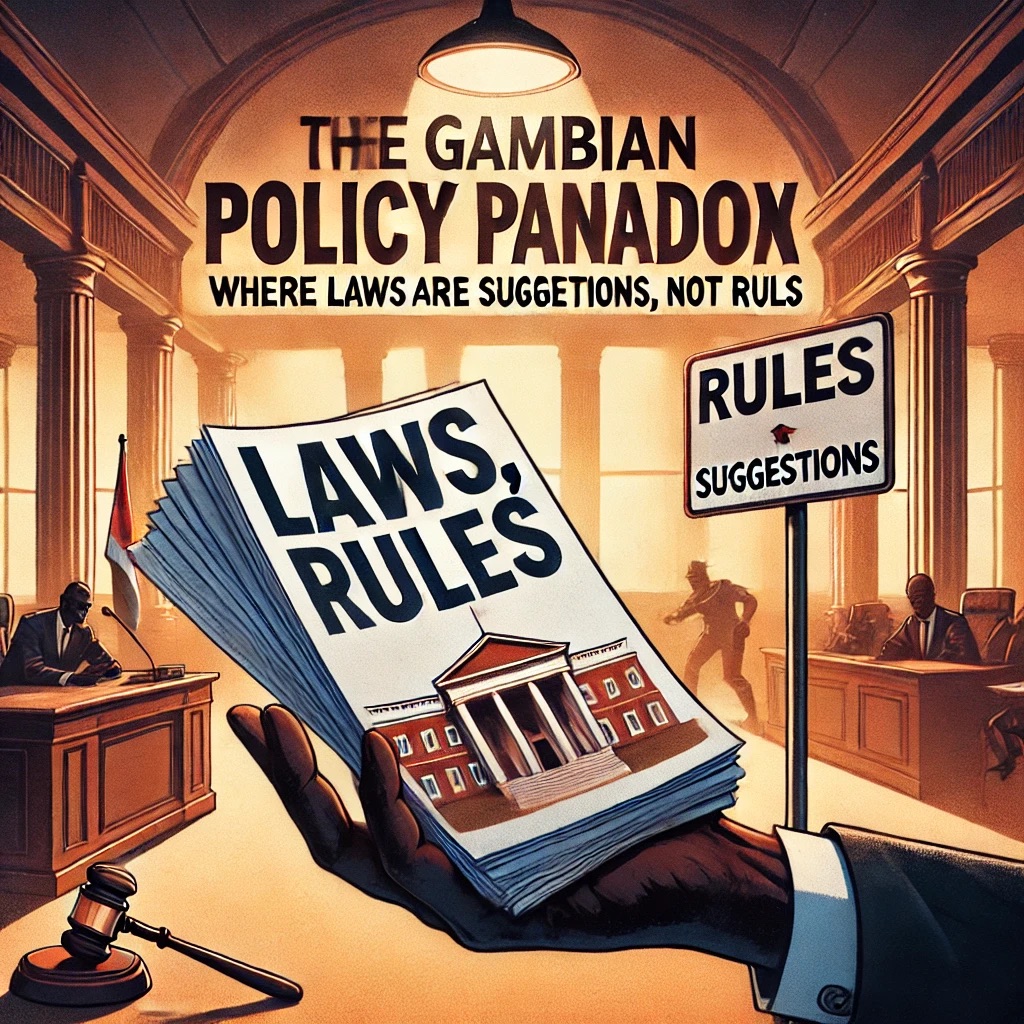
In The Gambia—often called the Smiling Coast—laws are meant to govern, regulate, and bring order. However, too often, they appear more as polite recommendations than enforceable rules. Nowhere is this more evident than in the transport sector.
Consider this: Transport fares in the country are not arbitrary figures plucked from the sky. They are carefully drafted, debated, and agreed upon by the government and transport unions before being officially gazetted into law (transport act). This means there is a legal, standardized fare structure—one that should, in theory, be followed.
Yet, in practice, drivers frequently ignore these legally stipulated prices and charge whatever they see fit. Whether it’s hiking fares during rush hours, raising prices after fuel increases but refusing to lower them when fuel drops, or simply deciding that today’s trip to Brikama should cost D50 instead of D35—drivers set their own rules.
And here’s the kicker: they get away with it— Nobody stops them. The public grumbles, but they still pay. The government warns, but nobody listens. The law says one thing, but reality laughs in its face.
# NOW, LET’S TALK ABOUT BREAD PRICES
Now, let’s shift gears. If we cannot enforce a gazetted, legally binding transport fare system, how do we expect to regulate the price of bread—a commodity with no legally mandated price at all?
The price of bread in The Gambia is not set by law. There is no official document stating that a loaf must cost X dalasis. It is dictated by market forces: the cost of flour, fuel, transport, and labor. If a legal transport fare structure is openly ignored, how then can we expect Mawbeh Salieu—a bakery owner— to adhere to some unwritten rule about keeping bread prices stable?
If we allow one sector to operate outside of government regulations with no consequences, we should not be shocked when other businesses follow suit. This is not just about transport or bread; it is about the larger issue of policy implementation failure in The Gambia. Laws are written, but they are not enforced. Rules exist, but they are not followed. And when enforcement is weak, private actors—whether drivers, bakers, or wholesalers—will set their own prices, policies, and priorities.
So, before we demand bakery owners to keep their prices steady, maybe we should first ask ourselves: Why can’t we even enforce the laws we already have? Because if a government-regulated transport fare can be ignored, then market-driven bread prices will surely follow the same path.
The blame game continues… 😎

